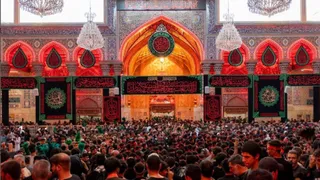
Over 2 crore Muslims from various countries converged to the Iraqi city of Karbala as a larger war looms over the Middle East. These Muslims, the majority of them coming from the Shia sect of Islam, participated in the annual pilgrimage to the holy shrine of Prophet Muhammad’s grandson Imam Hussain and his brother Abbas in Karbala. The Arbaeen Walk, occurring during the Islamic lunar month of Safar, marks the end of a 40-day mourning period for Imam Hussain, who was slain by the second Umayyad Caliph Yazid ibn Muawiya in the seventh century.
The Arbaeen Walk is not just a pilgrimage but a profound symbol of the Shia Islamic faith. Regarded as the largest annual gathering, the Arbaeen walk has only grown over the years even after many years of attacks and persecution of people participating in the walk. Pilgrims, chanting ''Labaik ya Hussain'' (''I am answering you, O Hussain"), reaffirm their commitment to the values of justice and resistance epitomised by Hussain’s martyrdom.
This massive annual gathering serves as a testament to Hussain’s refusal to surrender to injustice, values which many of his followers embody to fight against injustice and oppression across the globe calling it a resistance for a better world.
Arbaeen Walk And Politics
Historically, the pilgrimage faced severe restrictions under various regimes, including the Umayyad and Abbasid Caliphs and later under Iraq's dictator Saddam Hussein. However, since 2003, following the fall of Saddam Hussein's regime and the rise of Shia governance in Iraq, the Arbaeen pilgrimage has seen a resurgence. Despite threats from extremist groups like ISIS, which have targeted pilgrims with bombings and attacks, the pilgrimage has continued to grow. In 2023, it attracted a record 25 million participants.
Iran's Role In Arbaeen Walk
Iran has played a significant role in facilitating the pilgrimage, both logistically and financially. The event is a public holiday in both Iran and Iraq, and the Iranian government is heavily involved in supporting the pilgrimage.
Reports suggest that Iran invests around USD 500 million annually to support the Arbaeen Walk, a commitment that has faced criticism in light of domestic issues such as severe electricity shortages. In 2023, nearly 94 per cent of the pilgrims entering Iraq for Arbaeen were Iranian, reflecting Iran’s substantial contribution and involvement.
Palestinian Solidarity In Arbaeen Walk
The Arbaeen Walk this year was marked by profound solidarity with the Palestinian cause amid the ongoing conflict in Gaza. As pilgrims walked the 80 kilometres from Najaf to Karbala, they displayed Palestinian flags and banners, symbolising their support for those suffering in Gaza. This act of solidarity reflects a shared sense of grief and anger over the devastating impact of the conflict, which has claimed over 40,000 lives.
Despite the historical sectarian divides between Shias and Sunnis, the pilgrimage has become a unifying force, drawing attention to the plight of Palestinians and reinforcing the commitment to the values of justice and resistance carried by Imam Hussain.
Iraqi Hospitality
The journey from Najaf to Karbala is marked by exceptional Iraqi hospitality. Along the 80-kilometre route, Iraqi volunteers set up stalls to offer food, water, and shelter to the pilgrims. As pilgrims make their way from Najaf to Karbala, they are met with an outpouring of warmth from local Iraqis who open their homes for pilgrims. Makeshift stalls along the route serve an array of food and refreshments, all provided freely to support the pilgrims' journey.
Impact On Regional Tensions
This year’s Arbaeen Walk occurred against the backdrop of escalating regional tensions, particularly between Israel and Iran. The recent assassination of Palestinian leader Ismail Haniyeh in Tehran has exacerbated these tensions, casting a shadow over the pilgrimage. Despite the historical sectarian divisions, the Arbaeen Walk has increasingly become a platform for expressing collective grief and solidarity with the Palestinians, highlighting a broader solidarity that transcends sectarian lines.