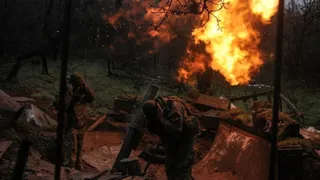
In a dramatic escalation of Middle Eastern tensions, the United States and Israel have executed a large-scale coordinated military operation against Iran. Reports indicate that over 1,000 targets were hit across the country. High-ranking Iranian officials, including Supreme Leader Ayatollah Ali Khamenei, are reported to have been killed in the strikes.
US President Donald Trump defended the action as a preemptive necessity to neutralise the Iranian threat and halt its nuclear ambitions. However, critics have labeled the move illegal, arguing that a president does not have the unilateral authority to launch an all-out invasion of a sovereign nation.
Contradictory Justifications And Intelligence Gaps
President Trump claimed the strikes were a defensive measure against an "imminent" Iranian attack on US assets and allies. He further asserted, without providing specific evidence, that Iran was only one month away from acquiring a nuclear weapon. This statement appears to contradict his own claims from a few months prior, where he stated that the US had already successfully dismantled Iran's nuclear capabilities.
The administration’s messaging has shifted frequently, with objectives varying from immediate self-defense to forced regime change and the "liberation" of the Iranian people. Notably, several of these claims do not align with findings from US intelligence agencies.
War Powers Resolution And Executive Authority
The War Powers Resolution (WPR) of 1973 was designed to limit a president's ability to commit US forces to an armed conflict without congressional consent. Under this law:
- The President can only deploy troops if there is a formal declaration of war by Congress, specific statutory authorisation, or a national emergency created by an attack on the US or its military.
ALSO READ: Can Anyone Stop Trump From Making A Mess Of The World? Here's In An Option
- The administration must report the action to Congress, a process the Trump administration has reportedly initiated.
- Troops must be withdrawn within 60 days unless Congress grants an extension or declares war.
- In response to the strikes, bipartisan members of Congress are expected to introduce legislation this week to halt further military action.
Constitutional Conflict: Who Can Declare War?
The US Constitution grants Congress the sole power to declare war, while the President serves as Commander-in-Chief. While past presidents have authorised minor tactical strikes in the interest of national security, legal experts argue that an operation of this magnitude targeting a sovereign nation's leadership and infrastructure, constitutes an act of war that exceeds constitutional boundaries.
International Law And Legality Of Strikes
The United Nations Charter generally prohibits the use of force against the territorial integrity of any state. Exceptions are made only under two conditions:
- Direct authorisation by the UN Security Council (UNSC).
- The inherent right to self-defense following an armed attack.
As there was no prior attack by Iran and no UNSC mandate, the legality of the operation is being fiercely debated globally. While the concept of "anticipatory self-defense" exist, allowing for a strike if an attack is truly imminent, the US has yet to present the "smoking gun" evidence required to justify this under international norms. Furthermore, the US veto power at the UNSC likely shields it from formal international legal repercussions, though many nations have already condemned the strikes as a violation of international law.
The Assassination Debate: Was Targeting Khamenei Legal?
The killing of Ayatollah Ali Khamenei has sparked a specific legal firestorm. While Israel reportedly carried out the direct strike with US intelligence support, US involvement is scrutinised under Executive Order 12333, signed by Ronald Reagan in 1981, which prohibits government-sanctioned assassinations.
Under international law, the targeted killing of a head of state during peacetime is viewed as an illegal assassination. While killing a political leader can be considered a lawful act during a declared "armed conflict," experts argue that because this conflict began without a formal declaration or a clear state of war, the legal status of the killing remains highly contentious.