Iran is facing one of the biggest crises in its history after the United States and Israel launched a joint military strike against it on February 28. Tehran's retaliation has further escalated tensions in the Middle East, with growing fears of uncertainty over trade, fuel and economic cooperation. India's position is also closely watched as New Delhi maintains a pragmatic approach in its relationship with Iran.
How will the India-Iran relationship flourish under the new Supreme Leader, as Ayatollah Ali Khamenei is now dead? The question has taken centre stage. The attention has also shifted to one of India's most ambitious projects in Iran, the Chabahar Port. The project, which involves India's strategic and commercial interests, faces heightened risk due to the ongoing crisis and US sanctions on Tehran.
While Prime Minister Narendra Modi had once called Chabahar a "golden gate", connecting the Indian Ocean to Central Asia and Europe, it now seems like India has another way to reach Europe, if not via Iran. New Delhi is reportedly recalibrating its connectivity strategy, with special focus on the India-Middle East-Europe Corridor (IMEC).
What Is Chabahar Port, Why It Is Imporant For India?
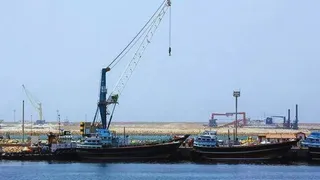
Chabahar Port, located in southeastern region on the Gulf of Oman, is only oceanic port of Iran. India has undertaken to develop the Shahid Beheshti Port at Chabahar, by equipping and operating General Cargo and Container Terminal for a period of 10 years. The port provides India with a direct maritime and land route to Afghanistan and Central Asia, bypassing Pakistan.
Moneycontrol quoted an international relations expert, Tarun Agarwal, as saying: “India will not take a very hard stand on Chabahar port." He stated that India is already attempting to build up IMEC and that Chabahar “is not part of that equation”.
What Is IMEC?
India, the European Union, France, Germany, Italy, Saudi Arabia, the UAE and the US had signed an MOU, committing to develop a new India-Middle East-Europe Economic Corridor (IMEC). The IMEC would comprise two separate corridors. The east corridor connecting India to the Gulf and the northern corridor connecting the Gulf to Europe. The corridor aims to provide a reliable and cost-effective cross-border ship-to-rail transit network to supplement existing maritime routes.
How Will IMEC Benefit India?
Often dubbed as a "modern-day Silk Route”, it would open the possibility of enhancing connectivity between India and Africa through the Middle East via this corridor. As per the planned project, the corridor would include railways, roadways, energy pipelines, clean energy infrastructure, and undersea cables. It will majorly benefit India by enhancing maritime security and the faster movement of goods between Europe and Asia. The IMEC corridor would lower logistics costs, enable faster connectivity and secure the movement of goods. However, the project is not going on in rapid pace amid regional conflicts in the region.
ALSO READ: Trump Turnaround On 'Boots On Ground' Remarks: Vows 'Revenge' After Attack On US Embassy In Riyadh