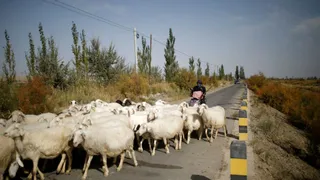
Chinese farm owner Zuo Xiaoyong was stunned to see his job ad for shepherds to work in the remote and rugged grasslands south of Mongolia becoming the day's top trending social media post. More than 700 people applied for the two positions, including white-collar employees from megacities Shanghai and Chongqing, factory workers across China, and even university graduates.
The response to Zuo's late April ad - which drew 59 million views within hours on Weibo, China's version of X, where it generated 21,000 different discussion threads - reveals the growing strains in the country's job market.
"I didn't expect it to go viral," said Zuo, adding that a 10th of the applicants had just finished university, while others had debt, grinding industrial jobs, or were worn down by workplace politics. "It seems ordinary people are having a hard time finding work."
China's cut-throat, low-reward job market
While headline unemployment has hovered just above 5 per cent, underemployment in China is rising, and private sector incomes have lagged economic growth for most of the past decade. Blue- and white-collar workers alike complain about the '996' culture of working 9 a.m. to 9 p.m., six days a week.
Analysts expect the labour market to worsen in coming months, as factories face higher costs due to the Iran war, while AI adoption accelerates, and a record 12.7 million university graduates this summer begin job hunting.
The reaction to Zuo's ad was "symptomatic of what continues to be a highly competitive and often low-rewarding labour market," said Lynn Song, chief China economist at ING. "Urban jobs are becoming less attractive and more rare."
ALSO READ: China Discontinues Publication Of Unemployment Figures After Record High Jobless Rate In June
China's 5 per cent economic growth relies heavily on surging exports, as manufacturers sacrifice profits to gain market share worldwide, putting more pressure on workers back home. James Guo applied for the job because he was exhausted by his work at a factory making shipping containers.
"You have no idea what it's like to work more than 13 hours a day, fastening screws until your hands are swollen and covered in blisters, without even having time to go to the bathroom," the 21-year-old said. "The workload is too intense, I can't take it anymore."
Zuo was looking for shepherds, preferably a couple, to take 3,000 sheep out to graze on a 2,000-hectare (4,942 acres) pasture in the summer, and undertake strenuous indoor feeding and cleaning during the winter when temperatures can drop below minus 30 C.
ALSO READ: Explained: China struggles to find ways to contain COVID amid economic slowdown
Salary and "perks"
For that, the shepherds would each get 8,000 yuan ($1,178) per month, well above the national urban average in private companies of roughly 6,000 yuan, and have accommodation and groceries provided.
Shaun Rein, managing director of China Market Research Group, said master's degree holders from top universities sought similar salaries in Shanghai, but most of the income would vanish on renting a tiny apartment and paying for other basic expenses.
Zuo, who also owns 200 cattle, said the pay matched the hardship. "The salary is high, but whether you can work long-term and get through the winter is what matters most," Zuo said. "This is not tourism."
(With inputs from Reuters)