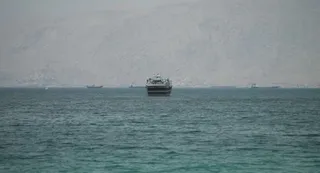
Tensions have escalated once again in the Gulf region despite ongoing peace talks between the US and Iran and a 60-day interim ceasefire. The latest flashpoint emerged after Oman announced an alternative maritime route for oil tankers.
Iran strongly objected to the new shipping corridor and warned vessels against using it. However, several ships continued to sail through the route. Reports on Thursday claimed that a vessel, identified as Singapore-flagged Ever Lovely, travelling along the newly designated corridor was struck by a missile. The UK Maritime Trade Operations (UKMTO), however, said there were no reports of casualties.
Following the attack on Thursday, the UN shipping agency paused its evacuation initiative to get hundreds of ships and seafarers out through the Strait of Hormuz.
"I have been informed of an attack in the Gulf of Oman on a vessel which passed through the Strait of Hormuz. This vessel did not transit under the IMO’s evacuation framework," Reuters quoted Arsenio Dominguez, Secretary-General of the UN's International Maritime Organisation.
Oman’s Toll-Free Maritime Corridor
Oman, with the support of the United Nations and the International Maritime Organisation (IMO), has provided a temporary maritime corridor for the safe passage of ships.
Oman designated two alternative temporary routes, north and south, to the existing shipping lane to allow vessels leaving the region to pass through safely. The most significant feature of this new arrangement is that ships will not be charged any transit fees or tolls.
Iran, on the other hand, has long advocated for charging a fee in exchange for providing security to ships passing through the Strait of Hormuz. Iran's Islamic Revolutionary Guard Corps (IRGC) has declared this new route from Oman completely illegal. The IRGC has stated that only routes designated by Tehran will be valid in the Strait of Hormuz, and ships departing from these routes will face strict action.
US Rejects Iran's Toll Proposal
The United States has firmly opposed any move by Iran to impose tolls on ships transiting the Strait of Hormuz. President Donald Trump said any future agreement allowing Iran to levy such charges would be unacceptable to Washington and described the issue as a potential "game changer."
US Secretary of State Marco Rubio, who is in Bahrain for the Gulf Cooperation Council (GCC) meeting, also warned that if Iran succeeds in imposing tolls in the Strait of Hormuz, it could set a precedent affecting other strategically important global waterways.
Trump also denied any US involvement in the reported missile strike on a school in Minab, Iran. He said several missiles were fired during the incident and that it remains unclear who launched them.
Trump Scores Political Win in US Senate
Amid the growing regional tensions, President Trump secured a significant domestic political victory after the US Senate voted down a resolution seeking to limit his military powers. The resolution was defeated within 24 hours. Ahead of the vote, Trump met Republican lawmakers and urged them to oppose the measure. The outcome is seen as strengthening the White House's position in any future negotiations with Iran.
Trump also expressed disappointment over what he described as the lack of support from several NATO allies, including Spain, Italy, Britain, Germany and France, regarding Iran. Speaking to NATO Secretary General Mark Rutte, Trump criticised their stance and asserted US military strength, claiming that the United States could destroy Venezuela "within an hour" and Iran "within a week" if it chose to do so.
You May Also Like To Watch: