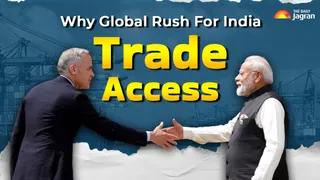
Canadian Prime Minister Mark Carney is scheduled to visit India today- first visit after the relations between the two were marred by the killing of a Khalistani terrorist. The high-profile visit of Carny is significant in two ways: improving strained ties and negotiating a Free Trade Agreement (FTA) with India. In an interview with CBC News, Canada's Minister of International Trade Maninder Sidhu expressed hope in the possibility of concluding the FTA by the end of the year.
Canada is not the only country in the world which is actively negotiating a trade deal with India. Besides, Israel is also in the queue to grab the opportunity. Recently, India signed a historic trade deal with European Union after two decades of negotiations.
ALSO READ: India-US Trade Deal To Be Operationalised In April; FTAs With UK, Oman, And Other Countries Soon
India signed 9 trade agremeent in recent months
With this, India has concluded nine free trade agreements (FTAs), covering 38 nations, enabling the country's shipments to get preferential access to nearly two-thirds of global markets, Commerce and Industry Minister Piyush Goyal said on Wednesday.
On Tuesday, met a delegation from Israel who are in India for the first round of India-Israel Free Trade Agreement (FTA) negotiations and said these mark an important step towards enhancing bilateral trade and economic cooperation.
So, what is making a global rush for the Indian market?
India's economy is rapidly growing: India is one of the world’s fastest-growing major economies, with a population of nearly 1.4 billion and rising consumer demand across sectors like technology, manufacturing, services, and energy. That makes it an attractive market for exporters and investors.
Strategic diversification of trade: Several countries are reducing overreliance on traditional partners like the US or China amid rising tariffs and geopolitical tensions. Trade ties with India help diversify market risk and open new opportunities for investment and exports.
India's integration into global supply chains: Industries like IT, pharmaceuticals, textiles and manufacturing are becoming an integral part of the supply chain, and India is becoming a top supplier.
Preferential market access: When countries sign FTAs with India, they often get lower tariffs and better access to India’s large market. That’s increasingly valuable as overall global trade becomes more competitive, and as India negotiates FTAs with the EU, New Zealand, Chile, and others.
India’s active trade diplomacy: Under its trade policy, India has been actively negotiating multiple FTAs, which encourages other nations to join before markets get locked into competing agreements. The Indian commerce minister recently said, “every country wants to enter into a trade deal with India.”
(With inputs from agency)
You may also like to watch