Twelve days into the war, the United States and Israel have dealt big blows not just to the Iranian striking and defence capabilities but also to the centuries-old historical sites, some even recognised as UNESCO World Heritage Sites.
The war started with joint strikes on Iran by Israel and the US on February 28 under the name 'Operation Epic Fury'. Trump had announced that the US was carrying out 'major combat operations' in Iran, hinting at a regime change operation.
Which sites are hit?
Golestan Palace: Situated in Tehran, it is a UNESCO-listed landmark and has suffered significant damage. The place has the famous Mirror Hall and the Berelian Hall, both of which have been damaged.
The Palace dates to the Safavid era but was mainly constructed during the subsequent Qajar Dynasty (1789-1925).
Naqsh-e-Jahan Square: Naqsh-e-Jahan is a 17th-century site reportedly damaged in the airstrikes. According to a report by The Art Newspaper, it was hit in a strike at the provincial governorate building in the Dawlatkhaneh complex. The complex also dates back to the 17th century.
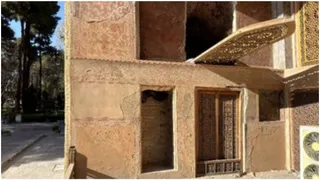
Chehel Sotoun Palace and Garden: Another heritage site in Ifshan, the cultural capital of Iran, the Palace was hit along with Ali Qapu, both the UNESCO-listed sites.
ALSO READ: Iran War: Thai Ship Travelling To Gujarat's Kandla Port Hit By Missile In Strait Of Hormuz
It is a popular tourist destination renowned for its extensive frescoes depicting royal receptions, historical battles, and Persian mythology.
The palace presents some of the largest and most unique examples of Persianate painting.
Other prominent sites: Among other prominent historical sites in Ifshan which suffered damage in the ongoing conflict are 17th century Rakeb-Khaneh pavilion (House of the Jockey), Ashraf Hall, and the nearby 15th-century Teymouri Hall.
While the Rakeb-Khanah pavilion was built to store the equestrian equipment and harnesses of the royal stables, Ashraf hall was a highly decorative residential structure.
The hall was associated with the Safavid court. Teumouri Hall, on the other hand, is a Timurid-era building which was later converted into the Natural History Museum.
The report cited officials in Lorestan province in western Iran, saying that the sites were hit even after the presence of the Blue Shield Emblem, an international protective symbol defined by the Hague Convention.