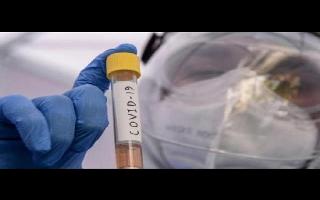
New Delhi | Jagran News Desk: Last week, a new variant of the deadly COVID-19 - a combination of two sub-variants of Omicron - was detected in Israel. The new variant, which is "still unknown around the world", has been detected when several countries, including China and South Korea, are witnessing a spike in COVID-19 cases.
Though the Omicron variant remains the dominant COVID-19 strain across the world, the World Health Organisation (WHO) has said it, along with expert networks and researchers, is "monitoring and assessing the evolution of SARS-CoV-2 since January 2020."
"WHO and its international networks of experts are monitoring changes to the virus so that if significant amino acid substitutions are identified, we can inform countries and the public about any changes that may be needed to respond to the variant, and prevent its spread," said the global health body on its website.
"Globally, systems have been established and are being strengthened to detect 'signals' of potential Variants of Interest (VOIs) or Variants of Concern (VOCs) and assess these based on the risk posed to global public health," it noted.
What are the key COVID-19 variants?
Following are the key COVID-19 variants that have been detected across the world:
Alpha:
The Alpha or B.1.1.7 variant was first detected in the United Kingdom (UK) in September 2020. The WHO has declared it a VOC as it is suspected to be 40 per cent to 80 per cent "more transmissible than the wild-type" of COVID-19.
Beta:
Also known as B.1.351 variant, the Beta strain was detected first in South Africa in May 2020. Currently, it has been designated as VOC.
Gamma:
The Gamma variant, whose scientific name is P.1, has also been dubbed as a VOC by the WHO and was first detected in Brazil in November 2020. It has 17 amino acid substitutions, 10 of which are in its spike protein. It also comprises two distinct subvariants - 28-AM-1 and 28-AM-2.
Delta:
The Delta variant, also known as the B.1.617.2 strain, was first detected in India in October 2020 and was responsible for the second wave of pandemic in the country. The Delta variant has been dubbed as a VOC by the WHO due to its "increased transmissibility".
Omicron:
Like Beta, the Omicron variant - scientific name B.1.1.529 - was also detected in South Africa in November 2021. It has 32 mutations on its spike protein and has several sublineages, including BA.1.1.529 and BA.2. According to the WHO, the Omicron variant is the dominant variant circulating globally.
Will vaccines work against all key variants?
Several studies have claimed that two doses of current vaccines might not be enough to give protection and people might need booster shots. However, experts argue that vaccines remain the best line of defence against the deadly COVID-19 pathogen.
"A couple of changes or mutations in the virus should not make these vaccines ineffective. But right now there are studies going on in labs around the world to actually confirm that," said WHO's Dr Soumya Swaminathan.
"And in the small possibility that perhaps these are less effective against one or both of these variants, nowadays the way vaccines are developed, it will be possible actually to also change the composition of the antigens and the vaccines quite quickly."