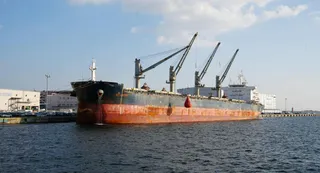
Amid escalating tensions in West Asia, Kharg Island, a critical hub of Iran’s economy located in the Persian Gulf, has emerged as a focal point of international political and security discussions. The island plays a key role in the global energy market.
It lies in Iran’s Bushehr province, approximately 24 kilometres from the mainland. This small island has become an important energy and maritime hub for Iran. Oil tankers departing from Kharg Island navigate through the Persian Gulf and the Strait of Hormuz to supply oil to countries worldwide.
Its strategic location gives it significant geopolitical and economic importance. Although small in size, roughly one-third the size of Manhattan, Kharg Island measures about 8 kilometres in length and 4 kilometres in width. The surrounding deep waters allow large oil tankers to dock easily and load crude oil.
ALSO READ: India Boosts LPG Production By 30%; Govt Assures Fuel, Fertiliser Supply | Check Key Measures
Why is it called the economic lifeline of Iran?
Kharg Island is often referred to as Iran’s economic lifeline because around 90 per cent of the country’s crude oil exports originate from here. Pipelines carry oil from Iran’s major oil and gas fields to the island, where large storage tanks and export terminals transfer it onto ships bound for international markets.
Oil tankers leaving Kharg Island pass through the Strait of Hormuz, one of the world’s most critical maritime trade routes. Any disruption here could have a significant impact on global energy supplies.
The island hosts several key oil industry facilities, including storage tanks, export terminals, long jetties, and an extensive pipeline network. Three major power plants operate on the island, directly supporting the loading and shipment of crude oil.
Beyond its economic role, Kharg Island holds strategic military importance. The island houses air defence systems, a naval base, helicopter hangars, and air traffic control towers, making it a potential target in any military conflict.
Kharg Island is among the world’s major oil export hubs. It can load up to 10 supertankers at a time, with each vessel capable of carrying up to 85 million gallons of oil. The deep surrounding waters enable the smooth navigation of these massive ships.
China is considered the largest importer of oil from Kharg Island. Despite Western sanctions, Iran often exports oil via a “shadow fleet” of ships that circumvent restrictions.
- Oil exports to China contribute around 6 per cent of Iran’s economy, nearly half of the country’s government expenditure.
- Approximately 13 per cent of China’s total oil imports come from Iran.
Kharg Island was heavily attacked during the Iran-Iraq War in the 1980s. Iraqi forces bombed the island multiple times, causing extensive damage to oil storage and export infrastructure. Iran later rebuilt the facilities and redeveloped the island as a major oil export hub.
Following recent US attacks, Iranian officials reported powerful explosions on the island, which lasted for about two hours, shaking the entire area. Despite this, Iran claimed that oil exports and normal activities continued.
Significant damage to Kharg Island’s oil infrastructure would have a direct impact on Iran’s economy, potentially halting most oil exports and reducing government revenues.
Globally, such disruption could push oil prices sharply higher and destabilise the international energy market.
Some security analysts suggest that if the US captured Kharg Island, it could almost completely halt Iran’s oil exports. The island could also serve as a strategic base for military operations against Iran. However, the US Department of Defence has not confirmed any such plans.
ALSO READ: US-Iran War: Trump Vows To Reopen Strait Of Hormuz; Asks China, UK, Other Countries To Send Warships
History of Kharg Island
- 1960: Iran begins developing Kharg Island as its main oil export hub with terminals and storage facilities.
- 1970: The island rapidly becomes a major oil export hub with large tanks and jetties.
- 1980-1988: Iran-Iraq War; Iraqi forces bomb the island repeatedly, causing significant damage.
- 1990: Iran rebuilds damaged facilities after the war.
- 2000-2010: Modernisation increases export capacity.
- After 2010, Oil exports continued despite international sanctions.
- 2026: US airstrikes target military bases on the island, but oil infrastructure remains untouched.
Kharg Island continues to be a vital node for Iran’s economy, energy exports, and strategic military operations, making it a key focus amid rising regional tensions.