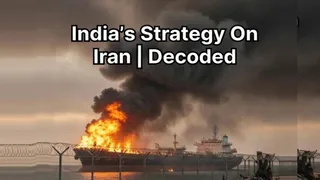
US-Iran War: The deadly war between the US and Iran entered its 13th day on March 12, with sad reports that a few Indians have been killed and left injured. Both warring sides have shown no inclination to resort to a diplomatic solution to the ongoing armed conflict in the Gulf region, which has adversely affected fuel trade.
Attempt To Drag India Into War
In the last two days, three Indian nationals were killed, and a few were left injured after a Thai and a US ships were attacked by Iranians missiles. An Indian national was killed in an attack carried out by Iran using a "suicide" boat against a US-owned oil tanker near Iraq. US-owned and Marshal Island-flagged oil tanker Safesea Vishnu was attacked off Khor Al Zubair port inside Iraq's territorial waters by an Iranian "suicide" boat, news agency PTI reported, quoting sources.
ALSO READ: What Iran War Means For Your Fuel Bill, Your Gas Cylinder And Your Savings
India's Reaction To The Attack On Ship Bound For Gujarat Port
Earlier on Wednesday, India deplored the escalating attacks on commercial shipping in West Asia after a Thai-flagged bulk carrier bound for Gujarat's Kandla Port was targeted by Iran's Islamic Revolutionary Guard Corps (IRGC). The Ministry of External Affairs (MEA) said India "deplores the fact that commercial shipping is being made a target of military attacks in the ongoing conflict in West Asia".
ALSO READ: India Working To Bring Back Citizens From Iran Via Armenia, Azerbaijan: MEA
India's Calculative Move
Considering the sensitivity of the issue, India has not shown aggression against Iran, but at the same time issued a strong statement, showing displeasure over the killing of Indian nationals. The MEA said India reiterates that targeting commercial shipping and endangering innocent civilian crew members, or otherwise impeding freedom of navigation and commerce, should be avoided.
ALSO READ: Can Iranian Drone Reach California? US West Coast On High Alert Over 'Surprise Attack' Threat
There would be apprehension in the people's minds that if India enters the ongoing Gulf conflict, as Indian nationals have been targeted. Nevertheless, there is no sign that India would jump into the armed conflict, considering the complexity of the issue.
Here Are The Five Reasons Why India Would Not Enter The Gulf War
1. Safety Of Indians Living In Gulf Regions: India cannot engage in armed conflict in the Gulf region, as approximately 10 million Indians live in the Middle East countries. Engaging in a war in the Gulf Cooperation Council (GCC) region means endangering the lives of millions of Indians. The Ministry of External Affairs said it has been closely monitoring the situation involving Indian nationals in the region and that Indian missions are working to ensure the safety and welfare of the diaspora.
ALSO READ: What Iran War Means For Your Fuel Bill, Your Gas Cylinder And Your Savings
2. Fuel Dependency: A large portion of India's fuel supply comes from the Middle East. India imports about 60 per cent of its LPG consumption, and out of these imports, about 90 per cent come through the Strait of Hormuz, which has been impacted due to the ongoing war. India’s daily consumption is about 55 lakh barrels. 70 per cent of crude oil comes from the Strait of Hormuz. The attacks choked the key energy transit route that carries 20 per cent of the world's global crude oil shipments. In such circumstances, India would not attempt to make things difficult for itself amid increasing concerns over the supply of fuel in India.
3. India's Ties With Iran: India shares a very good bond with Iran. Diplomatic channels are active between the two nations. Recently, India gave shelter to an Iranian warship - IRIS Lavan - with 183 crew members amid war. Also, India officially expressed condolences over the death of Iranian Supreme Leader Ayatollah Khamenei. India's interest still lies in the Chabahar Port project. Also, Iran has not spoken a bad word for India, so there is no point in showing aggression against Tehran.
4. No Direct Threat For India: Iran has not shown any direct threat against India. Ships, which were attacked, were owned by other countries. The war is primarily a result of a geopolitical confrontation between the US, Israel, and Iran over Tehran's nuclear programmes, which have no connection with India.
5. India Relies On Diplomatic Solutions: Even if things turn worse between India and Iran, the allies can address them through diplomatic channels. Embassies of both nations are actively communicating and in touch to address arising issues.