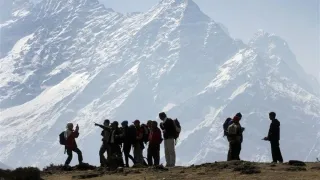
Mount Everest is facing an unusual environmental problem and this time, it is not just climate change. As thousands of climbers, guides and support staff make their way to the world’s highest peak every year, human waste is emerging as a growing concern. Among the pollutants accumulating around Everest is something surprisingly ordinary: human urine, New York Times reported.
How is human urines fuelling glacier melting?
Researchers and environmental experts have warned that urine left behind by climbers can introduce nutrients and other compounds into the fragile high-altitude environment. On glaciers, where extremely low temperatures slow natural decomposition, waste can remain for years rather than breaking down quickly.
ALSO READ: NASA shares stunning shots of ice avalanche on Mars | See Pics
The problem is particularly concerning in heavily visited areas such as Everest Base Camp and the higher camps. Climbers can spend days or weeks at extreme altitudes, and waste disposal becomes increasingly difficult as temperatures plunge and infrastructure remains limited.
Is human urine the only reason for melting?
But the idea that human urine is literally “melting” Everest’s glaciers needs some qualification.
The overwhelming driver of glacier loss across the Himalayas is rising temperatures caused by global climate change. Warmer conditions are accelerating snow and ice melt across the region, threatening water supplies for millions of people downstream.
Human waste, however, can add another layer of environmental pressure.
What happens if a human urine stays on himalyas for prolong period?
Urine contains nitrogen and other nutrients that can alter the chemistry of snow, ice and surrounding soil. When large quantities accumulate in a concentrated area, they can affect local ecosystems and contribute to contamination. On a mountain as fragile and extreme as Everest, even relatively small human impacts can become significant when repeated year after year.
ALSO READ: From Glacier Collapse To 'Liquid Concrete': How Nepal Flash Floods Turned Catastrophic
The growing waste problem has already prompted authorities and conservation groups to push for stricter waste-management measures on the mountain. Climbers have increasingly been encouraged, or required in some areas, to carry their waste back down rather than leaving it behind.
ALSO READ: Nirmal Purja, Missing Nepalese Mountaineer, Confirmed Dead In PoK Broad Peak Avalanche
Everest’s popularity has transformed the mountain into one of the world’s most famous adventure destinations. But that popularity comes with an environmental price.
The disturbing reality is that the Himalayas are being affected by multiple pressures at once, from global warming and shrinking glaciers to tourism, pollution and human waste.
So, while urine alone is not responsible for melting Everest’s glaciers, the controversy highlights a larger warning: even human waste can leave a lasting footprint in one of the planet’s most fragile environments.
You may also like to watch