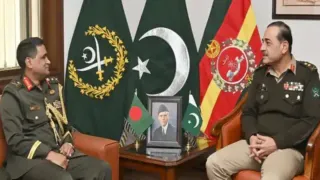
Bangladesh's evolving diplomatic and security relations with its neighbours have come under fresh scrutiny after the country's civilian intelligence chief travelled to Pakistan just days after returning from India. The back-to-back engagements have drawn attention to Dhaka's changing regional priorities, particularly as military and intelligence-level contacts between Bangladesh and Pakistan continue to expand, the Daily Sun reported.
Major General Abu Mohammad Sarwar Farid, Director General of Bangladesh's National Security Intelligence (NSI), travelled to Islamabad on Monday, aboard an Emirates flight. According to reports citing sources within Bangladesh's security establishment, he is expected to hold discussions with Pakistani intelligence and security officials. However, the precise agenda of his meetings has not been fully disclosed.
Interestingly, Farid's Pakistan visit came just 11 days after his return from New Delhi. He had travelled to India in October to participate in the eighth South Asian Counter Terrorism Conference, held on October 26 and 27. The regional gathering brought together security representatives to discuss counter-terrorism cooperation and other cross-border challenges. Farid returned to Dhaka on October 28.
While the purpose of his India visit was publicly identified, his subsequent Pakistan engagement initially attracted attention because of the limited information available about its agenda. However, Bangladesh's Daily Sun reported on November 10 that Farid travelled to Islamabad to attend the Margalla Dialogue 2026, an international forum scheduled from November 10 to 12. The event focuses on regional and global affairs and brings together policymakers, diplomats and strategic experts.
Pakistan-Bangladesh Military Ties Gain Momentum
The intelligence chief's visit coincided with another significant development. A four-member Pakistani Army delegation led by Major General Kashif Abdullah arrived in Dhaka on Monday for discussions with senior Bangladeshi military officials, including Lieutenant General Mir Mushfiqur Rahman.
The discussions reportedly focused on implementing the A2AST Agreed Act, a proposed framework for expanding military cooperation between the two countries. Its areas of engagement include intelligence-sharing, border security coordination, joint military training, exercises and exchanges between military establishments.
The latest developments follow an earlier visit by a six-member delegation from Bangladesh's Directorate General of Forces Intelligence (DGFI) to Pakistan on August 15 this year. Such exchanges indicate growing institutional engagement between the two countries.
Why Is India Watching These Developments?
For India, the expanding Bangladesh-Pakistan security relationship carries regional significance. Bangladesh shares a 4,096-kilometre border with India, making bilateral security cooperation important for addressing cross-border terrorism, illegal activities, organised crime and other security challenges.
However, increased engagement between Dhaka and Islamabad does not automatically establish an anti-India arrangement. The actual implications will depend on the nature of agreements, intelligence-sharing mechanisms and military cooperation that emerge.
With Bangladesh simultaneously engaging India and Pakistan, New Delhi will be watching closely to understand whether Dhaka is pursuing broader diplomatic diversification or moving towards a deeper strategic partnership with Islamabad.