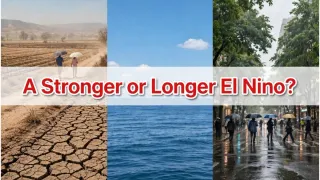
El Nino Update: The world is already experiencing the effects of El Nino, with shifting weather patterns and rising temperatures. The climate phenomenon continues to intensify, and its impact is expected to become more severe in the coming months. The European Centre for Medium-Range Weather Forecasts (ECMWF), in its latest report, has pushed its forecast for the El Nino peak to January, raising concerns about prolonged extreme heat and changing rainfall patterns across the world.
El Nino Peak Shifts By A Month
The El Nino is expected to peak by January as persistent westerly winds are pushing warm water east across the Pacific. Separately, multi-model forecasts for October-December 2026 expect the warming to peak around December. The European Union’s Copernicus Climate Change Service also noted that 2026 has a 20 per cent chance of matching or surpassing 2024 as the hottest year recorded.
"October has continued the pattern of remarkable global warmth, with record global and surface ocean temperatures," said Samantha Burgess of ECMWF. She said El Nino was adding heat to a climate already warmed by human activities.
What It Could Mean For India And World?
El Nino typically shifts rainfall patterns, bringing drought to some areas and heavier rain and floods to others. El Nino during the November-January winter season can affect India's temperatures, rainfall and air quality. In northern India, winter weather is largely influenced by western disturbances. However, El Nino can change atmospheric circulation and influence these weather systems, resulting in variations in rainfall across the plains and snowfall in the Himalayan regions.
According to the World Meteorological Organisation (WMO), in Southeast Asia, hotter, drier conditions could increase heat stress, pressure farms and water supplies, and raise wildfire risks. East Africa may face heavier rain and flooding during November-December. Southern Africa could see drier conditions affecting crops and livelihoods. In the Americas, wetter conditions are expected in parts of the north-western US and western South America, while drought risks may rise in Central America, the southern Caribbean and the Amazon.
Earlier, speaking about El Nino, WMO chief Celeste Saulo said, "El Nino means ‘little boy’ in Spanish, but it has the potential to deliver a massive blow to communities and economies around the world." She warned that droughts and floods could worsen as El Nino strengthens.
ALSO READ: El Nino Could Cause Over 3.73 Lakh Heat Deaths By March; Nigeria, India Among Worst-Hit
You May Also Like To Watch: