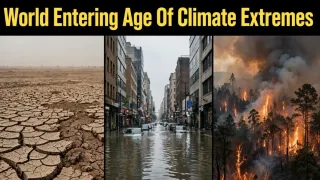
UN Secretary-General Antonio Guterres has issued a strong warning about the growing threat of climate change as world world leaders gather in Antalya, Turkiye for the COP31 climate summit. He has urged countries to take stronger action to reduce emissions and protect vulnerable communities. The warning comes at a time when rising temperatures, changing rainfall patterns, and extreme weather events like El Nino are already putting lives at risk in different parts of the world.
UN Chief Says World Facing More Climate Extremes
Guterres' warning comes after a year marked by severe weather events across different parts of the world. These include intense heatwaves across Europe, wildfires in Indonesia, and devastating floods in Nepal. Speaking ahead of the climate talks, Guterres said, "We have entered a new age of climate extremes." Talking about El Nino, he said, "A supersized El Nino is colliding with a planet already superheated by manmade climate change."
He also called on countries to "get serious by cutting emissions faster, accelerating a just transition from fossil fuels, and delivering the finance and protection vulnerable countries need". The issue of climate finance has already emerged as a major point of disagreement at COP31, with developing countries, including India, repeatedly stressing that richer nations must provide financial support to help them deal with climate change.
ALSO READ: El Nino Peak Delayed By A Month, May Prolong Global Heat; India Faces Concerns Over Winter Weather
El Nino To Make 2027 Even Hotter
The UN Secretary General's warning is also significant as a strong El Nino is developing and is set to impact this year's weather. The climate phenomenon is expected to influence weather patterns across the world, increasing the risk of heat and drought in several regions. The World Meteorological Organisation (WMO) has already warned that global temperatures remain at exceptionally high levels.
According to its findings, the average global surface temperature between January and September 2026 was around 1.47 degrees Celsius, which is above pre-industrial levels. WMO chief Celeste Saulo warned that the latest findings were alarming and said the current El Niño could bring more extreme weather into next year.
Why Is The Warning Significant For India?
For India, the warning is significant as the country is already experiencing the effects of rising temperatures and changing weather patterns. The highest temperature ever recorded in India was 52.3 degrees Celsius, which occurred in Mungeshpur, Delhi, on May 29, 2024. During the summer, intense heatwaves grip the country, making everyday activities difficult for people.
Himalayan Melting
Another major concern for India is the rapid melting of glaciers in the Himalayas. Reports have found that rising temperatures are increasing the risk of glacial lakes becoming unstable. If these lakes suddenly release large amounts of water, they can trigger devastating floods in mountain regions and downstream areas.
El Nino Impact
India also faces risk of weaker or erratic seasonal monsoon patterns during the season, which threatens agricultural output, water security, and rural livelihoods. Moreover, the development of a strong El Nino is also a major concern due to its possible impact on winter weather and northeast monsoon which brings rainfall to southern states. The impact, however, may vary across regions, with some areas facing rainfall shortages while others could experience heavy rain.
Tamil Nadu is among the states watching the situation closely. Earlier in August, Tamil Nadu Agriculture Minister R Vinoth told the Assembly that forecasts suggest 12 districts could be more affected by the super El Nino event. He also said the state was stepping up preparations by implementing the action plan drawn up by Tamil Nadu Agricultural University.
You May Also Like To Watch: