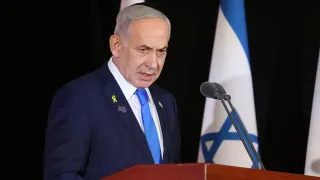
What began as a high-stakes referendum on Benjamin Netanyahu’s leadership has given way to an intricate political impasse. With initial counts underway, revised exit polls show Netanyahu’s right-wing bloc and an opposition bloc led by Gadi Eisenkot deadlocked at roughly 51 seats each in the 120-seat Knesset.
Early ballot counts reported Wednesday morning showed Likud capturing 25.34 per cent of the initial vote against 16.6 per cent for Eisenkot’s Yashar party. Yet even as Likud tracks toward an individual party lead of about 27 seats, the broader 51–51 tie leaves Israel facing another bruising coalition battle.
This early count does not determine which party will secure a parliamentary majority. Although Likud may emerge as the largest party, public frustration over Netanyahu's far-right alliance and ultra-Orthodox draft exemptions appears to have reduced his bloc's margin, threatening his return to power.
‘Strong, Nationalist, Right-Wing Government’
Delivering a hard-hitting speech during the early hours of Wednesday, Netanyahu revealed how he wished for a strong nationalist government in Israel. “We must establish a strong, right-wing, nationalist government,” Netanyahu said. He also slammed the Arab-led parties and warned against sitting with them in government.
On the other side, Eisenkot said the exit polls reflect a "lack of confidence" in Netanyahu, who is vowing to form a new regime. Arab voters celebrated the exit polls while supporters of far-right parties aligned with Netanyahu expressed disappointment.
It is significant to note that exit polls are not exactly accurate and are likely to have potential errors. Initial results are expected in the coming hours, while the final in the next few days.
ALSO READ: Israel Elections: Can Netanyahu Stage Another Comeback Amid Mounting Anger From October 7 Victims?
What Happens Next?
The Israel electoral race was widely seen as a referendum on Netanyahu’s nearly unbroken 17-year regime. The Israeli people have been left shattered under a series of events even before the deadliest attack in the country’s history. The resulting wars in Gaza, Lebanon and Iran, along with settler violence in the occupied West Bank, have stoked worldwide outrage, straining ties with Israel’s closest allies and fuelling a rise in antisemitism.
For many Israelis, the election represented a defining struggle over the state's character—pitting Netanyahu and his ultranationalist, religious allies against those striving to protect its liberal, secular foundations. Looking ahead, the opposition must confront deep social divides, particularly between right and left as well as Jews and Arabs, which have only deepened over Netanyahu's long and polarising tenure.
YOU MAY ALSO LIKE TO WATCH: