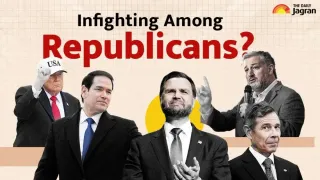
Following a major defeat in the 2026 US midterm elections, the Republican Party appears to be facing an internal crisis. The Republicans lost control of both the House of Representatives and the Senate to Democrats in an election that was considered crucial for the Trump administration. The outcome has triggered a wave of criticism within the party, with several senior Republican leaders and Trump allies openly questioning the President’s decisions, election strategy and leadership.
Iran War And Rising Living Costs Blamed
Vice President JD Vance was among the notable Republicans, who publicly listed the reasons for the defeat. He pointed to the economic impact of the Iran war as a major reason behind the Republican losses. The conflict, which began in February and was initially expected to be a short operation, has continued for months. It has driven up oil prices higher and increased pressure on American households.
"Everyone knows why we lost," he wrote on X, adding, "and any honest conversation about where we go from here must start there. If you’d like to argue it was worth it, that losing the Senate for the next 6 years was worth it, then do so."
Ted Cruz Calls Defeat A 'Blue Tsunami'
Senator Ted Cruz also delivered one of the strongest assessments of the Republican defeat, calling it a "Watergate-level repudiation”. He admitted that Republicans had failed to understand voters’ everyday concerns, particularly the rising cost of living. "2026 was not simply a blue wave; it was a blue tsunami. It was a kicking," Cruz wrote on X.
Other Republican leaders have also demanded a rethink. Mitt Romney blamed "bad policy, bad character," including "erratic tariffs" and "impulsive Iran war," as reported by The Hill. Senator John Curtis also said, "It’s time for Republicans to return to their roots. Our party has steadily abandoned the conservative principles that once defined us. It shows."
Growing Division?
All of these growing disagreements have exposed a deeper struggle between supporters of US President Donald Trump and other party leaders, as many call for a return to old party values. The division is also likely to shape the race for the 2028 presidential nomination. Vance’s criticism of the war may help him present himself as a leader willing to learn from the defeat and reconnect with voters. However, he also faces the risk of being held responsible for the administration’s unpopular policies, particularly the Iran war and economic pressures.
Vance's latest attempt to distance himself from Trump’s decisions while retaining the MAGA voter is seen as a major balancing act. US Secretary of State Marco Rubio, however, may see an opening to present himself as an alternative who can appeal to both traditional Republicans and sections of the MAGA movement.
The party also faces a difficult choice, which is whether to continue following Trump's political approach or return to more traditional conservative positions. How Republicans resolve this struggle will ultimately determine their leadership, presidential prospects and ability to rebuild support after a major midterms' setback.
You May Also Like To Watch: