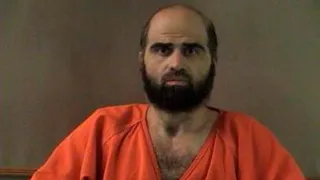
In a rare move, the US military has planned to livestream the execution of Nidal Malik Hasan, the man convicted of killing 13 people at Fort Hood in Texas in 2009. However, it has raised serious questions about the death penalty, human rights and the limits of public punishment. The execution is scheduled for December 3, with reports suggesting that Hasan will be executed by firing squad.
Fort Hood Shooting
Nidal Malik Hasan was a US Army psychiatrist who opened fire at Fort Hood, a major military base in Texas, in November 2009, killing 13 people and injuring 32 others. In August 2013, a military jury found Hasan guilty of 45 charges of premeditated murder and attempted premeditated murder. He was sentenced to death. Hasan was wounded during his arrest and has been on a wheelchair since then.
Why Is Livestream Plan Significant?
Under US military law, an execution by firing squad requires approval from the US president. According to Reuters, citing Pentagon, President Donald Trump approved Hasan’s execution on Monday, following a recommendation from Defence Secretary Pete Hegseth. If carried out, it would be the first US military execution by firing squad since 1945.
However, controversy has erupted over the government’s decision to allow people to watch the execution live. Hegseth has already indicated that the executive would be telecasted, saying, “We'll make sure that people are able to watch it, that it's public.” But legal experts have questioned why the government would turn an execution into a public event.
Experts have raised concerns about Hasan’s dignity, the purpose of broadcasting his death and whether the government is trying to create a spectacle. “It would be extremely, extremely strange” to livestream the event, said Eugene Fidell, a lawyer, author and military law expert who lectures at Yale Law School, as quoted by Reuters. Jonathan Lurie, an author and historian of military justice, echoed a similar point, stating, “What's the point of it? Who would want to see that?"
Is Livestreaming Execution Legal In US?
Livestreaming an execution in the US remains legally uncertain as there is no modern precedent or clear federal regulation governing the practice. Executions are generally conducted inside prisons or other restricted facilities, away from the public. The last legally sanctioned public execution in the US was in 1936, when thousands witnessed the hanging of a Black man convicted of raping a white woman. According to experts, courts have even previously restricted attempts by the media to televise executions.
You May Also Like To Watch: