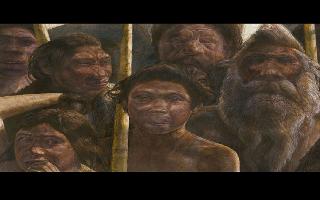
Beijing/New Delhi | Jagran World Desk: The Biology lessons on evolution teach the people worldwide that Neanderthals are the closest evolutionary relatives of humankind or Homo sapiens. However, this understanding is set to change, Chinese scientists said on Friday following the landmark study of a skull, identified to be that of a ‘Dragon Man’ which has been scientifically named as Homo longi.
The skull, named Harbin cranium, was discovered decades ago in 1933 in Harbin city of China but was studied only recently. Three separate papers were published in ‘The Innovation’ journal, all of which categorically stated that Homo longi could replace Neanderthals as closest evolutionary relative of Homo sapiens.
The skull could hold a brain comparable in size to that of modern humans but with larger eye sockets, thick brow ridges, a wide mouth and oversized teeth, double the size of present-day humans.
The authors of study said that while the skull shows typical archaic human features, the Harbin cranium presents a mosaic combination of primitive and derived characters setting itself apart from all the other previously named Homo species.
"It is widely believed that the Neanderthal belongs to an extinct lineage that is the closest relative of our own species. However, our discovery suggests that the new lineage we identified that includes Homo longi is the actual sister group of Homo sapiens,” Xijun Ni, a professor of primatology and paleoanthropology at the Chinese Academy of Sciences and Hebei GEO University, and author of two of the papers, was quoted as saying by Associated Press.
Homo longi aged between 138,000-309,000 year-old: Chinese Geoscientist
Geochemist and team member of one of the research papers published, Dr. Junyi Ge from the Chinese Academy of Sciences told London’s Natural History Museum that it is impossible to pin the cranium to an exact location with currently available technology. “All the evidence suggests that it was from a bed of water-laid sediments aged between 138 and 309 thousand years ago in the Harbin region,” Dr Junyi said.
Scientists say that the findings published on Friday establishes a third human lineage in Asia, other than Neanderthals and Homo sapiens with its own evolutionary history and shows how important the region was for human evolution.