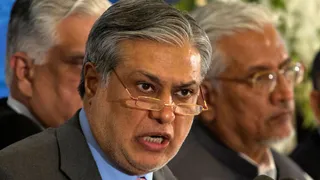
Pakistan’s Deputy Prime Minister and Foreign Minister Ishaq Dar has acknowledged that Indian drone strikes under Operation Sindoor caused damage to the Nur Khan Air Base in Rawalpindi, marking a rare admission after earlier denials by Islamabad. Speaking at a year-end press briefing, Dar confirmed that an Indian drone struck the sensitive military installation in the Chaklala area, injuring personnel stationed at the base.
According to Dar, India launched a large-scale drone operation over a short period, sending at least 80 drones into Pakistani airspace within 36 hours. He claimed Pakistani forces intercepted 79 of them, but one drone managed to evade air defences and hit a military target. “Only one drone damaged a military installation, and personnel were also injured,” Dar said.
Strike On Strategic Air Base
The Nur Khan Air Base, located near Pakistan’s military headquarters, is among the country’s most critical air force installations. Dar conceded that the strike occurred in the early hours of May 10 and resulted in damage, contradicting Pakistan’s earlier public denials despite satellite imagery indicating destruction at multiple air bases.
Dar revealed that Pakistan’s civilian and military leadership, led by Prime Minister Shehbaz Sharif, held an emergency meeting on the night of May 9 to review the situation and authorise decisions in response to India’s actions. The meeting took place amid rapidly escalating cross-border tensions following India’s anti-terror operations.
Ceasefire After Escalation
Operation Sindoor was launched by the Indian Armed Forces in the early hours of May 7. It was a retaliatory action following the April 22 terror attack in Pahalgam, Jammu and Kashmir. Indian strikes targeted nine terror camps in Pakistan and Pakistan-occupied Kashmir, followed by attacks on key military installations
Cross-border shelling continued after the drone strikes, raising fears of wider escalation between the two nuclear-armed neighbours. Dar said the situation de-escalated after Pakistan’s Director General of Military Operations (DGMO) contacted his Indian counterpart to seek a ceasefire, which India accepted on May 10.