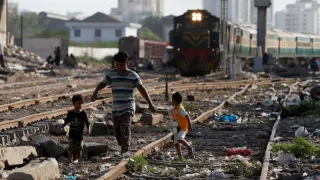
Poverty in Pakistan has surged to its highest level in 11 years. According to an official survey released by Planning Minister Ahsan Iqbal, nearly 29 per cent of the population now lives below the poverty line.
Meanwhile, according to a report in The Express Tribune, approximately 70 million people live in extreme poverty. This figure is based on a monthly poverty line of Rs 8,484, which is considered the minimum amount necessary to meet basic needs.
First Survey After 2018-19
Preliminary findings for the financial year 2024-25 show that poverty has increased by 32 per cent since 2018-19, when the last survey was conducted.
The data paints a picture of a shrinking middle class and a devastated working class. Since 2019, when the poverty ratio sat at 21.9 per cent, the number of people falling into the poverty trap has accelerated sharply, peaking to 28.9 per cent during the first year of Prime Minister Shehbaz Sharif’s current term.
According to the report, this is the highest level since 2014, when poverty was recorded at 29.5 percent. Income inequality has also worsened sharply. The survey shows that inequality has risen to 32.7 per cent, the highest level in 27 years.
ALSO READ: Hamas In 'Final Phase' Of Choosing Sinwar's Successor: al-Hayya And Meshaal Vie For Top Role
Highest Unemployment Rate In 21 Years
While the poor are getting poorer, the divide between the haves and have nots, has never been wider in recent history. The report confirms that income inequality has hit its steepest level since 1998.
Minister Ahsan Iqbal pointed directly to the "bitter pill" of IMF-mandated stabilisation. The withdrawal of subsidies and the aggressive devaluation of the currency have acted as a twin engine for inflation, crushing the purchasing power of the average household.