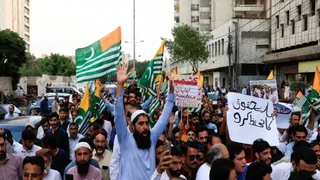
PoK Protests: Tensions are once again mounting in Pakistan-occupied Jammu and Kashmir (PoK), with the Jammu Kashmir Joint Awami Action Committee (JAAC) issuing a 48-hour ultimatum to the Pakistani government led by Prime Minister Shehbaz Sharif. The group has warned of a grand and final phase of protests if its 38-point charter of demands is not addressed.
48-Hour Ultimatum To Shehbaz Sharif Govt
The immediate trigger for the unrest is the regional elections scheduled for July 27. With the nomination process beginning on June 9, the JAAC announced a major protest march towards Muzaffarabad, signalling that it could become one of the biggest political confrontations witnessed in the region in recent years. The growing unrest highlights rising public anger over long-pending demands and governance issues in PoK.
Demand To Abolish Assembly Seats For Refugees
At the centre of the ongoing protests in PoK is the demand to abolish 12 reserved assembly seats meant for Kashmiri refugees settled in Pakistan. The JAAC argues that these seats allow Islamabad to maintain excessive influence over the political affairs of PoK. Earlier, the PoK Supreme Court ruled on June 7 that the 12 reserved seats are constitutionally protected and cannot be removed through an executive order. The court said any change would require a constitutional amendment.
JAAC’s 38-Point Demands
Apart from this, the JAAC has also called for a complete renegotiation of hydropower projects and measures to control rising inflation. The group has demanded increased subsidies on essential items such as flour and a reduction in electricity tariffs. It argues that people should not have to pay higher prices for electricity generated from resources within their own region.
PoK’s Political And Administrative Structure
Pakistan refers to the region as “Azad Kashmir,” but its constitutional and administrative structure presents a more complex picture. The PoK is not listed as a province of Pakistan under Article 1 of the Pakistani Constitution, which defines the country’s territorial units. As a result, the region does not have representation in Pakistan’s National Parliament.
On paper, PoK has its own President, Prime Minister, Supreme Court, and elected Legislative Assembly. However, significant powers remain with institutions controlled by Islamabad, particularly the Kashmir Council, which is headed by Pakistan’s Prime Minister.
Economic Challenges In PoK
One of the biggest concerns among people in PoK is the economic hardship. According to a 2025 study published in Nature, around 66 per cent of the population depends on agriculture and livestock, yet 57.1 per cent of people face food insecurity. Nearly 29 per cent of the population is malnourished, which is significantly higher than Pakistan’s national average of 19.9 per cent. In mountainous areas, food shortages affect nearly 90 per cent of households.
Healthcare indicators also remain concerning. According to Pakistan’s Voluntary National Review report, around 39 per cent of children under the age of five suffer from stunting. The maternal mortality ratio also stands at 104 deaths per 100,000 live births.
You May Also Like To Watch: