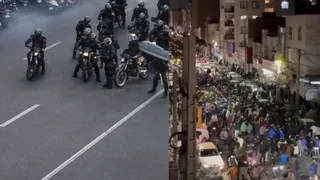
Central Tehran witnessed widespread unrest this week as protests erupted over Iran’s deepening economic crisis, marked by a sharp plunge in the national currency, soaring inflation and growing pressure on livelihoods. Demonstrations that began with shop closures in Tehran’s historic Grand Bazaar quickly spread to universities and major commercial districts, drawing a strong response from security forces.
According to Iran’s state media and opposition groups, shops remained shut across parts of the capital as traders protested the collapse of the rial, which hit a record low of around 1,390,000 to the US dollar on the open market. The currency slide, driven largely by Western sanctions and economic mismanagement, has sharply increased prices of basic goods, intensifying public anger.
The National Council of Resistance of Iran reported that large crowds marched along Jomhouri (Republic) Street before moving into nearby areas such as Naser Khosrow Street and Istanbul Square. Central neighbourhoods turned into flashpoints as protesters clashed with police near government buildings and commercial hubs. Security forces used tear gas and batons to disperse crowds, eyewitnesses said.
Sanctions, Inflation Fuel Public Anger
Student protests also broke out at several universities. Demonstrations were reported at Beheshti, Khajeh Nasir, Sharif, Amir Kabir, Science and Culture, and Science and Technology universities in Tehran, as well as at Isfahan University of Technology. The protests highlighted growing frustration among young Iranians over declining living standards and limited economic prospects. Ilna, a news agency affiliated with Iran’s labour movement, confirmed the widespread campus unrest.
Iranian state media said protests took place on both Sunday and Monday in Tehran and other cities, underlining the persistence of public discontent. The unrest coincided with the resignation of the central bank chief, further fuelling uncertainty over the government’s economic strategy.
Pezeshkian Calls Protest Demands ‘Legitimate’
President Masoud Pezeshkian acknowledged the protests, saying people’s livelihoods were his “daily concern.” In a social media post, he said he had instructed the interior minister to listen to the “legitimate demands” of protesters through dialogue. Government spokeswoman Fatemeh Mohajerani also said authorities officially recognised the protests and would set up a mechanism to engage with protest leaders.
With sanctions tightening, inflation accelerating and the rial under severe pressure, protests driven by economic hardship appear likely to continue, posing a growing challenge for the new administration.
ALSO READ: 'Do I Get Credit For It? No': Trump's Credit Obsession For Ending India-Pakistan Conflict Continues