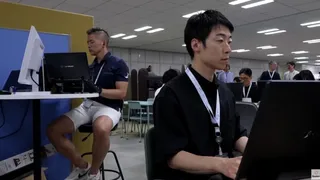
Imagine your boss telling you to come to the office in shorts. Shocking, right? Offices are traditionally seen as formal environments where employees are expected to wear suits, dress shirts, and trousers. Yet that’s exactly what’s happening in Tokyo, where the Metropolitan Government has expanded its long-running “Cool Biz” campaign, now encouraging staff to wear shorts to work.
Why is Tokyo pushing for shorts at workplaces?
Japan is bracing for another hot summer after enduring the hottest summer on record last year, when average nationwide temperatures were 2.36 degrees C above average summer, and heatstroke sent more than 1,00,000 people to hospital.
As extreme summer heat grips Japan, with temperatures approaching a blistering 40°C, the Tokyo Metropolitan Government has launched a campaign aimed at helping workers stay comfortable and reducing the energy load from air conditioning.
The updated initiative encourages male employees to abandon their traditional, stifling business suits. Instead, officials are pushing a much more relaxed dress code featuring T-shirts, trainers, and, most controversially, shorts.
Males flock at spa centres for hair removal
While the policy is intended to provide much-needed relief from the sweltering humidity, the introduction of shorts into Japan's typically formal office culture has sparked a heated debate. According to a June survey conducted by the Gorilla Clinic, a men's cosmetic treatment chain, 53.5 per cent of respondents oppose wearing shorts to work, while 46.5 per cent support the idea.
ALSO READ: Sleepless Nights, Morning Burnout: Why Europe Still Resists Installing ACs Amid Brutal Heatwaves
"Leg hair harassment"
Much of the opposition stems from a newly coined online term: sunehara, or "leg hair harassment." In local language, it is often called sunehara, a phrase that refers to the discomfort some employees, particularly women, feel when forced to look at their male colleagues' exposed, hairy legs in a professional setting.
The backlash highlights a deeper conversation about double standards and workplace etiquette. Some female office workers point out the glaring hypocrisy of the new campaign. While men are now being given state-sanctioned permission to dress casually and comfortably, women in many traditional Japanese corporate environments are still unofficially expected to wear pantyhose or tights when their legs are exposed.
ALSO READ: Creepy Cockroach Crawls On Journalist On Live TV, She Keeps Her Cool | Watch
The fear of committing sunehara has made many men self-conscious. Akifumi Funatsu, director of the Gorilla Clinic, noted that an increasing number of male clients are seeking laser hair removal on their legs. Rather than purely cosmetic reasons, men are treating hair removal as a matter of "social etiquette" so they can wear shorts without offending their colleagues.
Tokyo officials maintain that the guidance is simply about flexibility. "We want to give people more options in the severe heat, not tell them what to wear," said Noboru Watanabe, a Tokyo environmental official, adding that attire shouldn't be an issue as long as it isn't offensive.
Tokyo "Cool Biz" campaign
It is worth recalling that Japan's original "Cool Biz" campaign was launched in 2005 by current Tokyo Governor Yuriko Koike, who was then the environment minister. While ditching jackets and ties has become normalised over the past two decades, the great shorts debate of 2026 proves that baring legs in the office might still be a step too far for many.
You may also like to watch