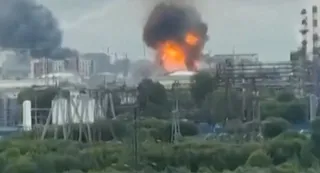
Ukraine has reportedly struck the Tyumen oil refinery in Russia’s Ural region, located nearly 2,000 kilometres (1,240 miles) from the Ukrainian border. The attack marks a further escalation in Kyiv’s ongoing campaign targeting Russia’s energy infrastructure.
Ukrainian President Volodymyr Zelenskyy said Ukraine has developed new long-range drones capable of operating over 3,000 kilometres. The Tyumen refinery is one of Russia’s largest private oil-processing plants. It can process approximately 1,51,000 barrels of crude oil per day and is a key supplier of fuel to the domestic market.
Russia Faces Oil Shortage, Long Queues
Several southern Russian regions are facing gasoline shortages, officials confirmed earlier this month. Muscovites also faced rising gasoline prices and fuel shortages this week following attacks on energy infrastructure.
Ukrainian drone and missile attacks on Russian oil refineries have deepened the fuel crisis across the country, reports The Wall Street Journal. Gasoline purchase limits have now been imposed in 53 regions, with motorists facing long queues and rationing.
According to the International Energy Agency, the attacks have disrupted around 20 per cent of Russia’s oil refining capacity, described as unprecedented in the history of the Russia-Ukraine conflict.
Moscow Refinery Attacked Twice In A Week
Ukraine struck a Moscow refinery on June 16 and again on June 18, in what could be one of the largest attacks on the Russian capital since 2022.
According to Reuters, industry sources said the June 18 attack damaged the “Euro+” crude oil processing complex, commissioned in 2020 as part of modernisation. The unit includes crude distillation sections with a capacity of around 140,000 barrels per day, nearly 47 per cent of the refinery’s total capacity.
An earlier strike on June 16 damaged another major distillation unit handling about 53 per cent of processing capacity.
ALSO READ: Does China Have Caste System Like India? Examining Reality Behind Viral Hukou System Debate
Fuel restrictions across Russia
According to independent Russian outlet The Bell, fuel purchase limits have expanded to 53 regions and occupied territories. To prevent hoarding, drivers are often allowed to buy only one tank per visit.
In 18 regions, purchases are capped at 50 litres per vehicle, while oil giant Tatneft has imposed limits at hundreds of stations nationwide. In some areas south of Moscow, sales have been restricted to just 20 litres per customer.
Crisis Deepens In Crimea
The situation in Crimea is especially difficult, where fuel tanker attacks and disrupted supply routes have led to rationing since late May. Drivers have reported waiting up to three hours at fuel stations.
Authorities have also introduced QR-code-based rationing systems, requiring drivers to show codes to receive fuel quotas. Repeated strikes have partially or fully shut several facilities, temporarily paralysing more than 20 per cent of Russia’s refining capacity.
The Russian government has banned jet fuel exports and extended deadlines for refineries to sell domestically produced fuel that does not meet Euro-5 quality standards.
You May Also Like To Watch: