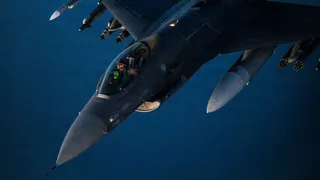
The US military unleashed a new wave of strikes against Iran on Tuesday and revoked a license allowing the country to sell oil after three tankers were hit by projectiles in the Strait of Hormuz, putting pressure on an already fragile ceasefire. "CENTCOM forces completed a new round of offensive strikes against Iran on July 7, hitting over 80 targets with precision munitions as an immediate response to Iran's latest attacks on commercial vessels transiting the Strait of Hormuz," US Central Command said in a statement.
"US forces struck Iranian air defence systems, command and control networks, coastal radar sites, anti-ship missile capabilities, and more than 60 Islamic Revolutionary Guard Corps small boats in and near the strait to degrade Iran’s ability to continue attacking international commerce flowing through the international trade corridor," it added.
Iran's main oil hub, Kharg Island, targeted
Iranian media reported explosions early Wednesday local time on Iran's main oil hub of Kharg Island, on Qeshm Island and in the southern port cities of Sirik and Bandar Abbas.
No civilian deaths were reported, but several people were injured by shrapnel from an "enemy projectile" that hit a commercial pier in Sirik, according to an Iranian state TV reporter. The reports said strikes also hit fishing piers in Sirik and in Bandar Abbas, where several fishing boats were set ablaze. Iran's Press TV said several blasts were heard on Kharg Island in southern Iran.
(A satellite image of Kharg Island, February 25, 2026. | CREDIT: REUTERS)
The tiny outcrop functions as Iran's main oil export hub, handling 90 per cent of all shipments. The US military previously carried out strikes on military targets on Kharg, a US official told Reuters in April, but said the strikes did not impact oil infrastructure.
ALSO READ: Three Tankers Attacked In Strait of Hormuz Within 24 Hours Despite Ceasefire; Iran Reacts
Markets will be watching for any sign of damage to Kharg's intricate network of pipelines, terminals and storage tanks. Even minor disruptions could further tighten global oil supply, adding pressure to an already volatile market.
Oil sanctions are back
In a potentially major blow to that agreement, Washington moved on Tuesday to withdraw a key concession that had allowed Iran to sell oil on international markets. Oil prices rose more than 3 per cent after the US announced the move.
ALSO READ: Pakistan-Brokered Peace In Jeopardy? Iran's IRGC Targets Commercial Ships In Hormuz
A US official said earlier that negotiators continued to work in good faith toward a final agreement with Iran. But control of the strait has given Tehran immense leverage, effectively allowing it to force a stalemate with the world's most powerful military. Analysts say Tehran uses attacks on ships to underscore that leverage as it negotiates a long-term peace deal with the US.
(With inputs from Reuters)
You may also like to watch