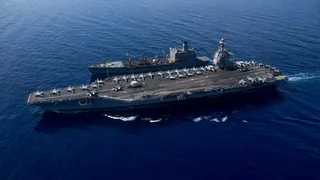
USS Gerald R Ford: The USS Gerald R Ford is one of the most advanced aircraft carriers in the United States. The aircraft carrier costs approximately 13 billion dollars, can accommodate up to 5000 sailors and aircrew, and can carry over 75 fighter aircraft. However, the people here lead a difficult life and face several problems that restrict them from getting the minimal ease of living standards.
One of the major concerns in the large fleet is the preparation of meals for the sailors. Around 17,300 meals are served onboard each day, including midnight meals for those on night duty. A team of 100 cooks prepares meals at the scorching heat of 57 degrees Celsius.
The cost of food varies between 45,000 dollars and 65,000 dollars per day. Supplies are transported across the ocean every 7–10 days. There are some hierarchical concerns too. While the ordinary soldiers dine in a common dining space, the officers of higher grade enjoy their meals in private.
Sailors Sleep In ‘Coffin Lockers’
People in the ship struggle with sleeping spaces as well. Even as the fleet covers a large area, the sailors sleep in smaller beds. Each bed is about 77 inches long and 27 inches wide, with only 20 inches of space at the top. The tiny size of the bed had given it the name of "coffin lockers." Meanwhile, living conditions in the modern aircraft carriers have been slightly improved, reducing the number of sailors per compartment to about 40.
The rooms are located in closed spaces, where the slightest rays of the sunlight struggle to reach. The constant noise from aircraft operations and machinery makes it difficult to sleep for the sailors. The sailors, therefore, resort to earplugs and sleep masks.
Clogged Toilets, Limited Laundry, Water Crisis
The washrooms, termed "heads," are usually shared by sailors. The carrier uses vacuum-powered toilet systems, which are prone to clogs.
ALSO READ: 'Pink Elephant' Dies In Jaipur After Viral Photoshoot, Netizens Say 'Cruelty Isn't Beautiful'
The sailors are also expected to save water. While a typical civilian uses 227 litres of water, the sailors are allowed to use 11 litres. Laundry operations are equally intense. Approximately 150,000 pounds of laundry are washed each week. These facilities operate for up to 20 hours a day, and temperatures reach 135°F, often forcing sailors to wash their clothes by hand to save time.
Despite these difficulties, the carrier functions like a self-sufficient city with these facilities. It has all the facilities needed to lead a normal lifestyle. The ship features a hospital, gymnasium, library, and so on.
Even as life is tough for the sailors residing on the ship, it's these conditions that enable the US Navy to maintain its presence around the world. For the thousands of sailors aboard, this floating steel city isn't just a place to work. It's their home, their duty station, and their nation's first line of defense.