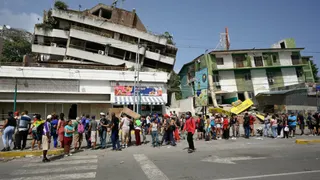
Venezuela Earthquake: The death toll in Venezuela has climbed to 920, while more than 50,000 people remain missing as rescue teams continue searching for survivors. The death toll rose sharply from 235 reported on Friday.
The government said 172 people remained trapped, 920 had been confirmed dead, and 3,360 were injured after the twin earthquakes devastated parts of Caracas and surrounding areas on Wednesday evening. More than 50,000 people have been reported missing, according to a Reuters report.
Venezuela was struck again on Friday afternoon when a 4.9-magnitude earthquake was felt in the capital, Caracas, and the nearby city of Maracay. In the worst-hit areas, including La Guaira state, public anger is growing over the slow pace of relief efforts.
Due to a lack of heavy machinery and limited government support, local residents and volunteers are continuing rescue operations, clearing debris by hand in an effort to find survivors.
ALSO READ: Venezuela Earthquake: Will Tremors 14,000 Km Away Push Up Petrol Prices In India?
Entire neighbourhoods can be seen in rubble, with dozens of buildings collapsing into piles of concrete and twisted steel. In several locations, rescuers spray-painted building names on the ruins to help identify search sites.
Volunteers from Caracas and Valencia have been delivering food, water and medical supplies on motorcycles to communities cut off by the disaster.
According to a United Nations report, the two earthquakes caused direct damage estimated at approximately 6.7 billion dollars. The second quake was the most powerful earthquake to hit Venezuela in more than a century.
Venezuela was struck by two devastating earthquakes measuring 7.2 and 7.5 in magnitude, which occurred within a minute of each other on Wednesday.
According to USGS forecast modelling, the final death toll could reach several thousand. Meanwhile, global aid and relief efforts are ramping up, with governments and humanitarian organisations around the world mobilising rescue teams, emergency funds, and essential supplies.