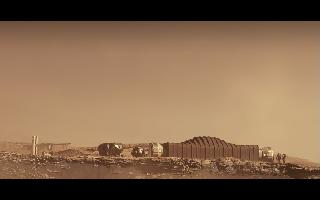
Washington, D.C. | Jagran News Desk: US space agency Nasa has invited applications for four people to live in a simulated Martian exploration habitat in a bid to send astronauts to Mars. NASA is preparing the applicants for the real-life challenges of future missions to Mars.
On Friday, the US agency started taking applications for participants to live for a year in Mars Dune Alpha. It is a 1,700-square-foot Martian habitat created by a 3D-printer that is inside a building at Johnson Space Center in Houston.
"Calling all Martians! @NASA is recruiting four crew members for a year-long mission that will simulate life on a distant world, living in “Mars Dune Alpha,” a 3D-printed habitat. Want to take part in research for the first human Mars mission?." NASA tweeted on its official handle.
You can learn more about NASA's year-long mission to live in Mars Dune Alpha by visiting their website at https://www.nasa.gov/feature/nasa-is-recruiting-for-yearlong-simulated-mars-mission.
The purpose of living in the Martian habitat is to simulate the challenges of a mission to Mars, including resource limitations, equipment failure, communication delays, and other environmental stressors. While staying there, the crew may be required to perform simulated spacewalks, scientific research, use of virtual reality and robotic controls, and exchange of communications. This will help NASA to produce important scientific data to validate systems and develop solutions related to living on Mars.
According to NASA, it is planning three such missions which are known as Crew Health and Performance Exploration Analog. The first mission will be undertaken in the fall (September 1-November 30) of next year.
What are the criteria?
The application is open only to US citizens or permanent residents in the age group 30-55. Apart from this, other criteria include proficiency in English, good physical health, and no smoking habit. Also, a master’s degree in a STEM field such as engineering, mathematics, or biological, physical or computer science from an accredited institution is required. NASA will also consider those applicants who have completed two years of work on a doctoral program in STEM, or completed a medical degree, or a test pilot program. Applicants who have completed military officer training or a Bachelor of Science in a STEM field with four years of professional experience may be considered.