
- By Harsh V Pant
- Thu, 04 Dec 2025 03:03 PM (IST)
- Source:JND
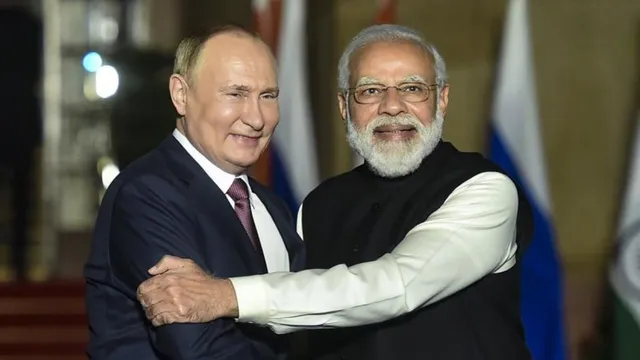
Defence cooperation is likely to prove a key topic at the India-Russia summit on December 4-5. The expected talks between the defence ministers, their second meeting this year, will cover several deals, including India's additional procurement of S-400 surface-to-air missile (SAM) systems, as well as potential contracts for the purchase and joint production of S-500 systems and the Su-57 fifth-generation fighter jets. While bilateral discussions on defence have clearly resurfaced, this does not mean that new agreements will be among the deliverables of the summit.
Since the Cold War era, defence has been a cornerstone of bilateral cooperation, with the Soviet Union emerging as a major arms supplier to India in the 1960s. Moscow's willingness to share its technologies and localise production, as evidenced by the establishment of the MiG-21 plant in India in 1962, along with the provision of military hardware following the US embargo in 1965, was the main driver of the two countries coming together as defence partners.
Specifically, the USSR bolstered the Indian Air Force (IAF) by exporting 200 Su-7 fighter bombers in 1967, which were superior to the jets in Pakistan's arsenal. In the 1980s, alarmed by India's diversification efforts, the Soviet Union stepped up its attempts to lure New Delhi with advanced weapons and technologies. This entailed updating the previously delivered equipment, such as tanks, fighter jets, missiles, and warships. In a sign of deep trust, the USSR leased a nuclear-powered submarine to India in 1987.
Following a "lost decade" in India's defence procurement from 1988 to 1998, which coincided with the weakest period of Russia's arms exports to India, the bilateral defence partnership re-emerged in the 2000s with a large number of deals, whose outcomes continue to sustain the relationship. The variety of weapons and equipment provided by Russia during this period included aircraft, helicopters, battle tanks, missiles, frigates and submarines – including the lease of a new nuclear-powered attack submarine – as well as an aircraft carrier.
The result of a rich history of defence tie-ups has been India's reliance on Soviet and Russian military platforms. For instance, the T-72 and T-90 main battle tanks have become the mainstay of the Indian Army tank fleet, while the Su-30s are the main combat aircraft and the backbone of the IAF. The BrahMos supersonic cruise missile, a product of the Indo-Russian joint venture, has enhanced India's precision strike capabilities and is undergoing further upgrades to extend its range.
The endurance of the India-Russia defence partnership is hardly surprising. For one, India continues to require maintenance and spare parts for the Russian military equipment and is therefore moving ahead with the acquisition of key elements, such as engines for tanks and fighter jets. As Russia unveils new engine versions, India gets an opportunity to upgrade its platforms, as demonstrated by Moscow's proposal to supply advanced AL-41 engines for the Su-30MKI fleet.
Two, recognising its strengths and showing flexibility in response to India's demands, Russia is ready for unrestricted technology transfer and localisation of production, as evident in its recent offer on the Su-57 jets deal. Three, despite facing major disruptions to the supply of key components, such as the gas turbines for Project 11356-class frigates for India, Russia managed to find a solution and ultimately delivered the vessels to the Indian Navy.
Following Operation Sindoor, in which Russia's S-400 air defence systems showcased their efficiency, New Delhi and Moscow have intensified their military talks at various levels. Suggesting an intention to further integrate Russian defence systems into India's air defence network, the Indian Ministry of Defence has recently given the go-ahead for the procurement of "a large number of surface-to-air missiles" for the S-400, with ranges of 120, 200, 250, and 380 kilometres.
A deal for an additional batch of S-400 SAM systems is also on the bilateral agenda. However, the new contract is seemingly in the initial stages, with cost-related negotiations and formal procurement procedures likely to take considerable time. On top of that, Russia's own defence needs, given the war in Ukraine, coupled with the significant delay in the supply of the remaining two S-400 units from the previous 2018 contract, mean that the delivery schedule for these systems is shrouded in uncertainty.
Russia, being bogged down by the war and prioritising the requirements of its own armed forces, along with India's consistent diversification policy, will remain a major challenge to the bilateral partnership. The upcoming summit may, however, provide insights into the future trajectory of defence ties, with Russia set to remain a key defence partner of India, albeit with a decreased share of the Indian arms market.
(Disclaimer: The writer is the Vice President at the Observer Research Foundation. Views expressed are personal.)