
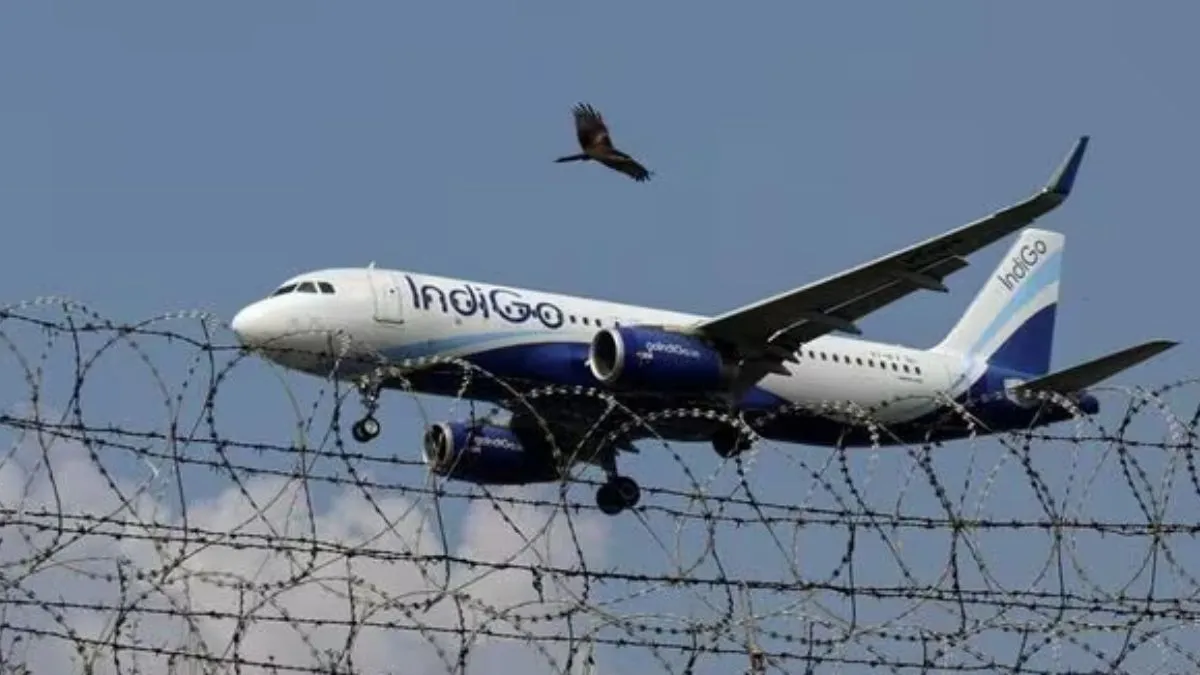
What would be the apt expression to describe the recent mayhem at Indian airports?
There is a word play involving hues of swan that analysts, economists and linguists often use to express unusual incidents.
Black Swan event is an unexpected, unpredictable incident with severe adverse consequences. Was the Indigo flight cancellation/delay really such an event? The revised roster, entailing more rest and fewer flights for pilots, was mandated by government regulation framed two years ago. It was common knowledge that in the absence of compliance, the airline would be woefully deficient whenever the authority decided to enforce the rule. There was hardly any unpredictability or uncertainty.
Grey Swan event refers to a predictable but unlikely occurrence that has a high adverse impact. Indigo management believed that stringent guidelines existed only on paper and were seldom enforced. They considered any action possible but improbable. After years of sitting over revised rules/deadline extension, was it actually as unexpected that at some point the authority would, for the sake of aviation safety and better work culture, walk the path?
ALSO READ: Jagran Opinion: IndiGo Crisis Highlights Need For Political Accountability In A Privatised Economy
I have been veering between Black and Grey Swan yet unconvinced that either applies to this chaos. How about the Red Swan event? Seemingly most appropriate. It refers to a crisis that is highly predictable, often discussed and forewarned, yet inaction on the part of those responsible leads to adverse consequences. The DGCA’s revised flight duty time limitation (FDTL) was announced years ago. Indigo was aware yet ignorant since they obviously didn’t want to incur additional cost, a classic recipe for the turmoil that followed.
Recommended For You
Is it not a clear example of a dominant market leader guilty of deleterious dereliction?
All the stakeholders have since tried to extenuate. The government withdrew the revised regulations and imposed a fare ceiling. Indigo apologised and announced a refund. It will take some more days before the crisis is alleviated but will it be sustainable?
2025 will go down as one of the worst years in Indian aviation history – the Air India crash in June, few chopper crashes and now this mass grounding of Indigo planes. The eventual sufferer is always the customer. I am reminded of an idiom from Greek mythology – “between Scylla and Charybdis”, more commonly understood as “between the devil and the deep sea”. What a travesty that passengers today are posed with a binary between safety and convenience”. There can be no debate that safety has to be non-negotiable and rules introduced to manage pilot fatigue cannot be diluted. You do not want overworked, insufficiently rested pilots in the cockpit, but the cost of uncompromising safety cannot be the pandemonium witnessed due to mass cancellations.
ALSO READ: 'Worst Behind Us': IndiGo CEO Says Airline Has Emerged Stronger As 2,200 Flight Services Restored
Safety is paramount but we also need to look beyond. What about passenger comfort and experience? Aviation is a service industry, an extension of hospitality, the reality though couldn’t be further from the truth. Leave aside privileges, air travellers struggle for basic consumer rights. The passenger rights charter in India is a slender document – ineffective, rarely acted upon and provides for only refunds and meals. Unlike the first world, airlines in India are not penalised for operational inefficiency.
You book a low fare ticket days in advance but the scheduled flight may be cancelled or overly delayed. A refund does not fund a costlier alternate ticket one is forced to buy. Unpalatable meals do little to assuage the agony of a stranded passenger. A passenger cannot afford to be late but airlines can cancel or delay without any cost. It may be an operational imperative but obviously grossly unfair. The rules must be revised to ensure that airlines are made to compensate passengers for cancellations/delays ascribable to their folly. It’s a standard industry practice in Europe and America.
The recent announcements by the government to take Indigo to task, slash its flights, not compromise on safety guidelines are laudable. Curtailing market leaders’ share can be argued to be a relic of the socialist era. In this case, however, it will be a case of missing the wood for the trees. State action isn’t to break down a large corporation but to ensure compliance. Besides, essential services cannot be allowed to be monopolised. The capital of capitalism and free market – America has also been alert to tackling monopolies in critical consumer services.
Duopoly isn’t a hallmark of a free market. The fourth largest economy with the third largest aviation market cannot have two carriers Indigo – 65 per cent and Air India – 30 per cent, control 95 per cent share. We need multiple airlines and some policy intervention is essential. Systemic industry problems that have shackled the sector will need to be dealt with. The government has acted to bring the major cost factors such as aircraft leasing, maintenance, repair and overhaul in line with international levels, aviation turbine fuel (ATF) that constitutes 50 per cent of airline operating cost in India as against just 20 per cent in some developed countries, remains a deterrent. If brought within the GST framework, the airlines will be able to claim input credit and lower their cost. Often in a democracy, you need political solutions for economic woes.
The aviation infrastructure has to keep pace with the fast growing Indian market. It is a critical sector, passenger safety and consumer delight are a sine qua non.