
- Rubio's India visit highlights trade, energy, and strategic autonomy.
- India-US relations face challenges over Russian oil, trade disputes.
- Washington must respect India's national interests for stronger partnership.
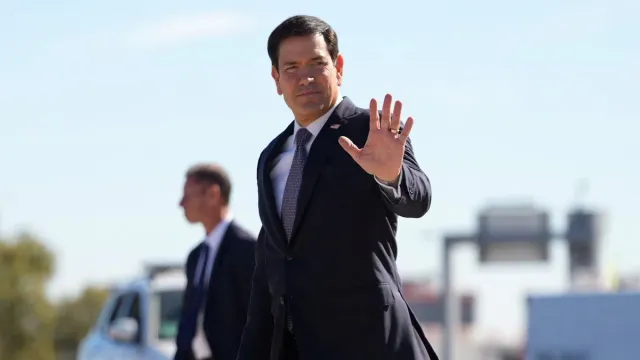
US Secretary of State Marco Rubio's scheduled visit to Mumbai and Jamnagar between October 17 and 22, 2026, comes at a consequential moment in India-US relations. With trade negotiations unresolved and Washington intensifying pressure over India's purchases of Russian oil, the visit will test whether the Trump administration can reconcile its transactional approach with the strategic importance it attaches to India.
The emphasis on Mumbai and Jamnagar, rather than a scheduled stop in New Delhi, points to the commercial and energy dimensions of the engagement. Yet the larger question is political: can Washington build a deeper partnership with India without expecting New Delhi to subordinate its national interests to American preferences? India recognises the importance of its relationship with the United States. Defence cooperation, advanced technology, investment, supply-chain diversification, and shared interests in the Indo-Pacific provide a substantial foundation for engagement. But strategic convergence does not imply strategic subordination.
India’s foreign policy remains anchored in strategic autonomy, and its partnerships are instruments for advancing national interests rather than ends in themselves.
For Washington, the challenge is to understand that distinction. India is prepared to cooperate closely with the United States, but the terms of that cooperation must reflect Indian priorities as well as American ambitions.
The prolonged negotiations over a bilateral trade agreement illustrate the difficulties confronting the relationship. The framework announced in February 2026 reduced some punitive US tariffs on Indian goods, with rates reportedly falling from levels as high as 50 per cent to around 18 per cent in earlier stages. Yet disagreements over market access, agriculture, reciprocal purchases, and tariff structures continue to impede a final agreement.
Recommended For You
Washington’s concern about India’s goods trade surplus reflects the Trump administration’s emphasis on reciprocity. But reciprocity cannot mean that India must accept American demands irrespective of their consequences for its economy. Agricultural sensitivities, industrial development, and domestic employment are integral to India’s political economy, not peripheral negotiating considerations. New Delhi should therefore resist the temptation to conclude an agreement merely to secure short-term tariff relief.
A durable deal must improve market access, encourage investment, and strengthen India’s economic capabilities without creating asymmetric obligations.
The United States, too, must recognise the limitations of tariff diplomacy. Economic pressure may bring negotiating partners to the table, but it cannot guarantee concessions. Excessive coercion risks encouraging India to diversify its markets and supply chains, undermining the very commercial relationship Washington seeks to deepen. The objective should be an agreement based on mutual benefit, not one in which India’s concessions become the principal measure of success.
India’s continued purchases of Russian crude are a major test of strategic autonomy, as Washington seeks to use economic pressure to influence the energy choices of countries trading with Moscow. With President Donald Trump having signed the Lindsey O. Graham Sanctioning Russia and Iran Act on September 18, 2026, authorising tariffs of up to 100 per cent on goods from major buyers of Russian energy under specified conditions, Rubio’s visit comes at a particularly sensitive moment ahead of the October 18 deadline.
For New Delhi, energy procurement must remain guided by national security, commercial viability and consumer interests, given Russian crude’s role in diversifying supplies and potentially reducing costs. India has little reason to accept a precedent that allows an external power to dictate its energy mix, while Washington must recognise that diversification requires competitive prices, reliable deliveries and attractive long-term arrangements. Reports of the United States moving towards Russian diesel purchases amid domestic fuel pressures further expose the tensions between geopolitical demands and national interests. The practical way forward is negotiation, including a predictable understanding on sanctions and any applicable waivers, to prevent the dispute from undermining broader bilateral cooperation.
Jamnagar gives the visit a distinctly strategic-commercial dimension, with Reliance Industries’ refining complex, reportedly capable of processing approximately 1.4 million barrels of oil per day, serving as a major hub for global petroleum processing and refined-product exports. Its capacity to handle diverse crude grades makes it central to debates over energy diversification, linking India’s energy security, global oil markets, private-sector investment and American commercial ambitions.
Investment and offtake arrangements associated with the refinery project announced by Trump in March 2026 in the Texas–Brownsville area could further deepen bilateral commercial ties, but Indian investment in the United States reflects India’s expanding economic reach, not an obligation to align with American energy preferences. Similarly, US energy suppliers must compete on price and reliability rather than rely on political pressure to secure market share. Jamnagar thus illustrates the central bargain underpinning India–US energy cooperation: stronger commercial ties are sustainable when they expand India’s strategic choices rather than constrain them.
A persistent difficulty in Washington’s approach is the tendency to equate strategic partnership with political alignment. Cooperation on defence, technology, and the Indo-Pacific is welcomed as evidence of convergence, while India’s independent positions on Russia, trade, and other international questions are sometimes treated as obstacles.
This misunderstands the basis of India’s importance. India’s economic scale, geographical position, military capabilities, and diplomatic reach make it a consequential power in its own right. Its ability to pursue an independent foreign policy is not a flaw in the relationship; it is an essential feature of the country Washington seeks to engage.
The Quad, defence exercises, technology partnerships, and critical-mineral initiatives demonstrate that substantial cooperation can proceed despite disagreements elsewhere. The task is to prevent differences over energy or trade from becoming impediments to progress across the entire relationship.
The objective is neither automatic alignment nor unnecessary distance, but a partnership in which agreement is negotiated rather than presumed. Rubio’s visit offers an opportunity to move beyond the recurring cycle of strategic reassurance and economic pressure.
Rubio’s visit comes at a moment of opportunity and uncertainty. Trade negotiations remain incomplete, the Russian-oil sanctions question is approaching a critical juncture, and both governments have incentives to expand energy investment and commercial cooperation. The Mumbai and Jamnagar engagements could help establish practical pathways forward, but they cannot eliminate the underlying differences in strategic priorities.
India’s rise is changing the terms on which it engages major powers. New Delhi has both the capacity and the incentive to resist arrangements that unduly constrain its choices. Its foreign policy will continue to reflect national interests, economic development, and strategic flexibility rather than an expectation of permanent alignment with any single power.
For Washington, the implication is clear. If it wants greater access to India’s energy market, it must compete commercially. If it wants a trade agreement, it must negotiate terms that recognise India’s economic priorities. And if it seeks a deeper strategic partnership, it must accept that India’s independent foreign policy is part of the relationship, not a problem to be corrected.
India is prepared to work with the United States, but it is not prepared to make the relationship the organising principle of its foreign policy. The more Washington understands this distinction, the greater the prospects for meaningful cooperation. The less it does, the more likely tactical disputes will obstruct strategic opportunities.
Ultimately, a durable India-US partnership will depend not on India's willingness to accept American terms, but on both countries' ability to negotiate as sovereign partners. Washington must recognise that India’s cooperation cannot be taken for granted or secured indefinitely through pressure. It must be earned through mutual respect, credible commitments, and a willingness to accommodate India’s legitimate national interests.
That is the essential message of Rubio’s visit: the future of the relationship will be shaped not by how far India adjusts to Washington’s expectations, but by how effectively the United States learns to engage a rising India on terms that New Delhi can accept.
(Note: The writer is the Vice President at the Observer Research Foundation.)