

Solah Shringar refers to sixteen bridal ornaments. It has sixteen methods that a woman should adhere to in order to improve every bit of her ornamentation on the day of her wedding. In Hinduism, the bride is associated with the goddess Lakshmi, who is revered as the embodiment of wealth, fertility, and beauty. According to Hindu tradition, the Solah Shringar is a celebration of this celestial beauty. Another explanation is that a woman is seen as the incarnation of Shakti (the consort of Lord Shiva) in Hinduism. With the use of these 16 shingar, the woman may safeguard her extremities and orifices while also managing the energy that emanates from them. Let us check out the significance of the Solah Shringar that must be performed by the Hindu brides as per Sanatan Dharma.
Solah Shringar And Its Significance
1. Bindi - Hindu women wear the Bindi, a treasured sign of their culture, whether they are married or single. On the other hand, a married lady must wear a Bindi. The centre of the eyebrows is a significant nerve point that during meditation is thought to assist in raising Kundalini energy. The "command centre" is this area, which is supposed to support the woman in keeping her mental equilibrium.
2. Sindoor - A red powder known as "sindoor" or "vermillion" is placed in the bride's central hair division. Sindoor, which is made with lime, turmeric, and a tiny bit of mercury metal, calms the body and eases the bride's tension.
3. Maang Tikka - Mang Tikka is worn on the middle parting of the hair that reaches the forehead. It is thought that Mang Tikka regulates body temperature. There is a very important scientific explanation for why it is placed at the centre of the hair parting. The Ajna chakra, which means "to know or perceive" in Sanskrit, is positioned at this place. The two petals of the chakra stand for the spiritual, material, and emotional union of man and woman.
4. Nose Ring - One of the most traditional and ethnic pieces of clothing in Indian culture is the nose ring or Nath in Hindi. It remains in place and is indicative of a married woman. According to Ayurveda, having one's nose pierced might alleviate labour and monthly problems because the nose is linked to the reproductive organs.
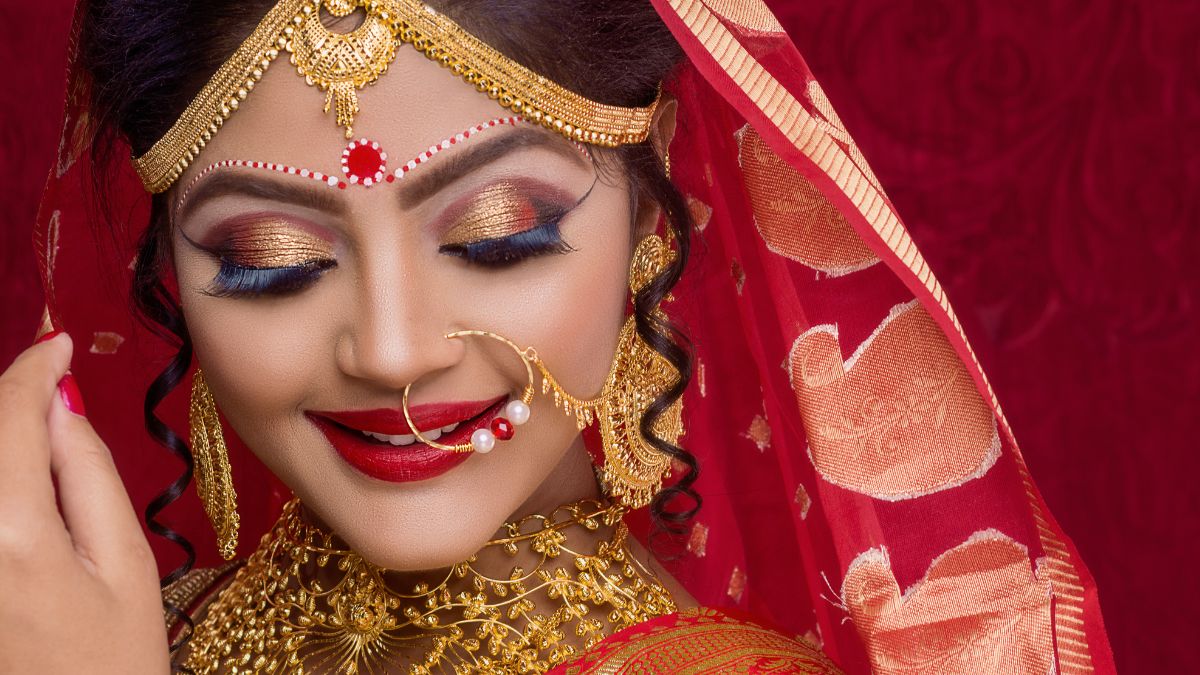
Solah Shringar refers to sixteen bridal ornaments. (Image Source: Canva)
5. Kajal - Black eyeliner, or kajal, draws attention to the eyes and enhances the bride's beauty. It is well known that the traditional, organic Kajal protects the eyes and their components.
6. Mangal Sutra - The Mangalsutra, which is given by the husband to the bride on their wedding day as a sign of commitment, trust, and unending love. The body needs necklaces like mangalsutras to regulate blood pressure and enhance blood circulation, among other functions.
7. Earrings - There are numerous acupuncture and acupressure points in our ears. Wearing earrings has an acupuncture effect on the body, which treats menstrual issues and maintains the kidney and bladder functioning properly.
8. Bangles - Also known as "Choodiyan" in Hindi, bangles are one of the most significant Solah Shringar items. Depending on the custom, these bangles might be crafted from iron, ivory, ceramics, green or red glass, gold, or any other metal. The sound of the bangles fortifies your hand's bones in addition to enhancing the bride's elegance. According to Ayurveda, the metals' qualities enter the body efficiently through the friction of the bangles with the hand.
9. Waistband - The waistband, sometimes called a kamarband or kardhani, is artistically crafted from gold and adorned with priceless stones. A kamarband, worn around the waist, eases cramping throughout the menstrual cycle and helps to regulate the length of each cycle. Some people use waistbands made of silver to help reduce belly fat.
10. Anklets - Also known as Payal, Anklets are beautiful ankle bracelets with little bells fastened to the ends. When the bride moves, it creates a lovely tinkling sound when worn on both feet. Ankle tingling and weakness are symptoms of sciatica, a condition that can be relieved by wearing anklets. It also relieves swollen heels and controls blood circulation. It is also recognised to treat irregular obstetric problems, hormonal imbalances, menstruation disorders, and reproductive issues.
11. Toe Rings - In addition to being a traditional marriage symbol, these toe rings are also said to reduce menstruation pain and boost fertility. This is so because the middle toe's veins are linked to the reproductive system's ability to conceive.
12. Aarsi - During the wedding ceremonies, Aarsi, a thumb ring with a mirror on it, allows her to see both her husband and herself.
13. Hathphool And Rings - Eight rings covering her palmer side are fastened to the bride's hands with a focal floral or medallion pattern. The rings on your fingers are said to be beneficial to your health and to assist in stimulating brain function.
14. Baaju-Band - Typically, the Baaju-band appears at Mughal, Jaipuri, and Rajasthani weddings. Usually, the upper arm is where it is worn. The arms' blood circulation may be controlled by the Armband, which also provides just the proper amount of resistance to keep one's arms relaxed.
ALSO READ: 5 Best Lessons From The Bhagavad Gita To Learn The Art Of Detachment And Let Go Of Things Easily
15. Mehendi - Pre-wedding anxiety and tension are banished by henna's cooling impact on the body. In addition to its scientific significance, henna's red hue is seen as fortunate due to its emotional, sexual, and fertility-related properties. The bride's tie with her husband and mother-in-law is greater the redder the henna colour.
16. Keshapasharachana - Hair is referred to as "Kesh," flock as "Pash," and arrangement as "Rachna." Following the bath, the bridal gown is traditionally worn and the hair is dried and styled in the newest fashion. The bride has her hair done and accessorised with flowers and jewellery.
(Disclaimer: This is based on general public information. Jagran English does not confirm its veracity. Before adopting any measures, consult an expert from the relevant field.)