

Have you ever wondered why rangoli is made at the entrance of almost every Hindu household during occasions, festivals, or other auspicious events? These intricate patterns are made with coloured powders, rice flour, flower petals or chalk, drawn directly on the floor.
In many South Indian homes, a simpler daily version called kolam is drawn fresh every single morning, even without any celebration. According to tradition, rangoli is a subtle invitation for prosperity to enter, for negative energy to move away and to fill the environment with positive energy.
Let's understand more about the spiritual significance of drawing rangoli at the doorstep.
What Is Rangoli?
The name Rangoli is derived from the Sanskrit word Rangvalli, meaning row of colours. It is a traditional Indian art form where intricate patterns are created on the floor using a variety of materials such as sand, flower petals, rice flour, lentils and beans.
Rangoli is usually made at the entrance of homes and temples during special festivities and occasions. It is called by different names in different regions of India: In Tamil Nadu, it is Kolam, and in Kerala, it is Pookalam. In Odisha, it is Jhoti, and in Andhra Pradesh and Telangana, it is Mugu.
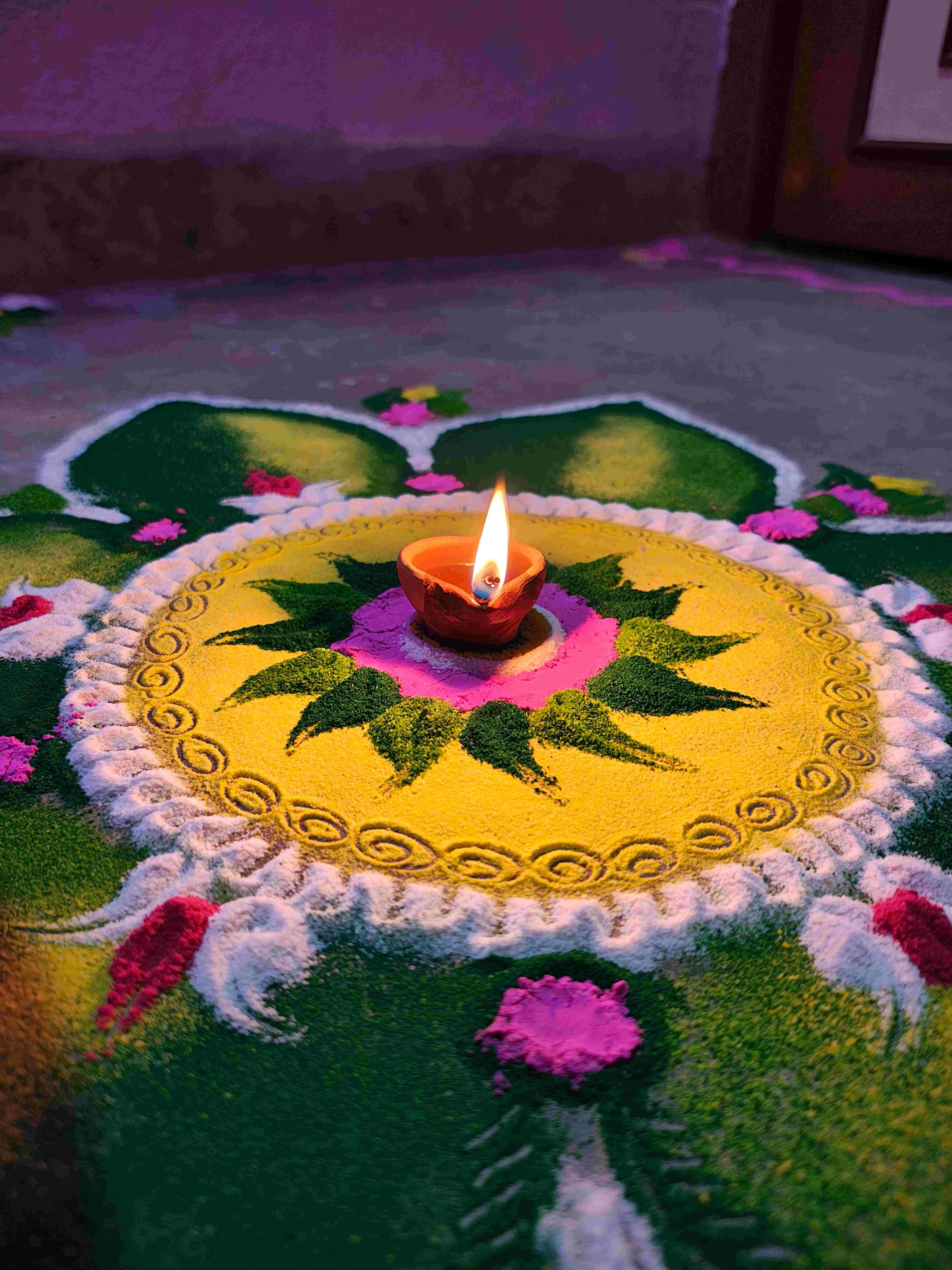
Rangoli is usually made at the entrance of homes and temples during special festivities and occasions (Image: Pexels)
Spiritual Significance Of Making Rangoli
Rangoli holds immense spiritual significance. It is believed to:
Invoke Divine Blessings: Drawing rangoli at the entrance invites the Gods and Goddesses into the home. During religious festivals and ceremonies, it enhances the presence of positive vibrations in the place.
Warding Off Negative Energy: A sacred geometry pattern creates a protective barrier to keep negative energy from entering the house.
Connection To The Five Elements: Rangoli often incorporates the five elements- earth, water, air, fire and space. Thus, drawing Rangoli at the entrance aligns the household with the cosmic energies, bringing harmony in the environment.
Act Of Compassion: Using natural materials like rice flour while making Rangoli symbolises prosperity and also serves as food for small creatures like ants and birds, reflecting the principle of ahimsa and compassion in Hindu philosophy.
Scientific Reason Behind Making Rangoli
Making Rangoli at home triggers the release of calming neurotransmitters, setting a structured tone for the day. When making Rangoli early in the morning by bending (pranam position) stretches the spine, improves blood circulation, and exposes the body to fresh morning air (Prana).
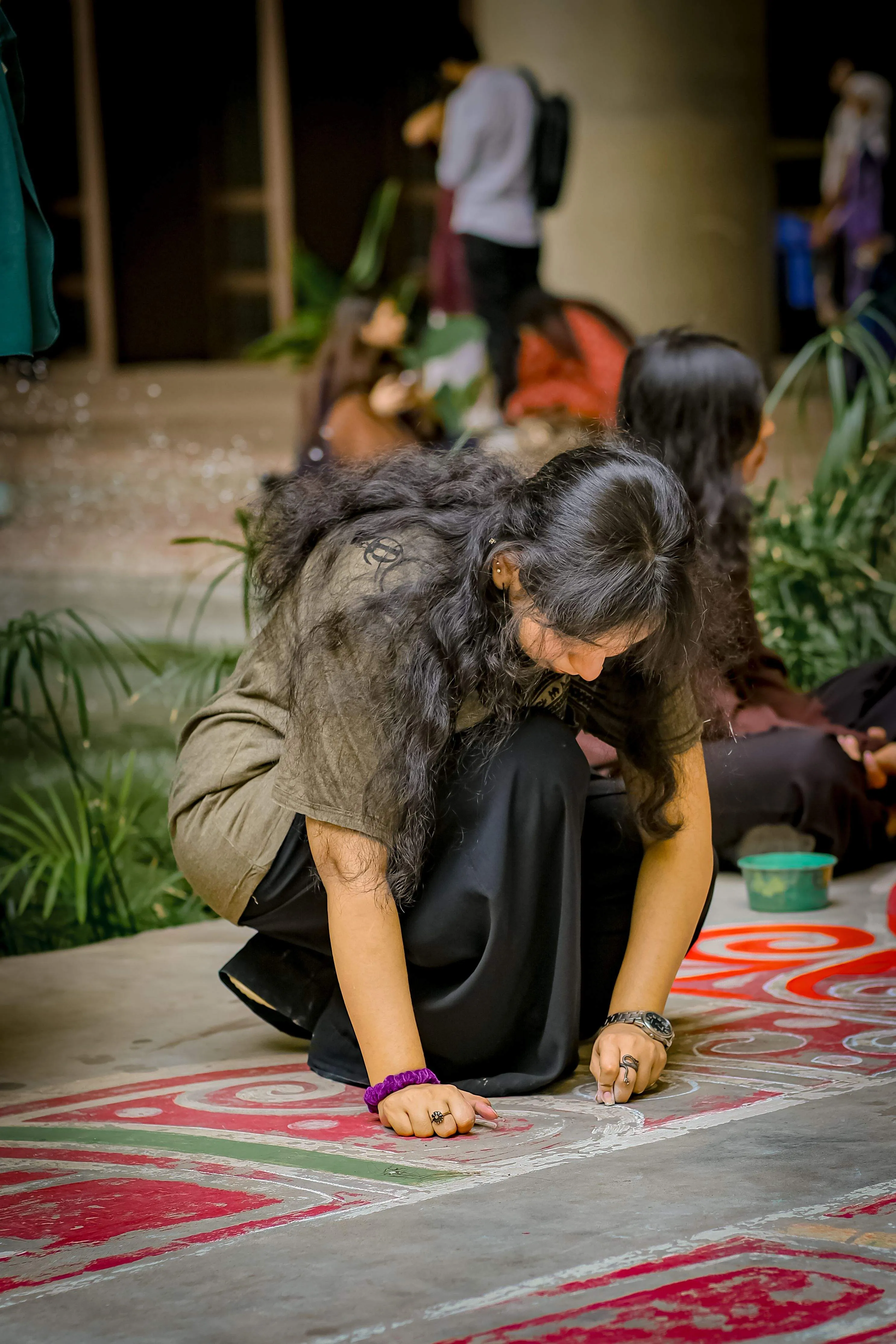
Making Rangoli early in the morning by bending (pranam position) stretches the spine (Image: Pexels)
When Should A Person Make Rangoli?
Ideally, rangoli should be drawn during the Brahma Muhurta (pre-dawn) or early morning after the household has been cleaned and bathed. It is also essential to make Rangoli during festivals like Diwali, Pongal, Margazhi, and weddings.
How Rangoli Is Made In Different Regions of India?
- In South India (Kolam), it is made of white rice flour, geometric grids, and continuous loops.
- In North India (Rangoli), it is made using vibrant colours, free-form floral patterns, and mythological imagery.
- In West India (Sanskar Bharti), large, intricate, and highly colourful circular patterns are often used in community celebrations.
- In East India (Alpana) ranglis is Often done with liquid rice paste, featuring flowing, organic white patterns on red floors.
ALSO READ: Radha Rani's Ashta Sakhis: Know the Names and Spiritual Significance of Her 8 Companions
A rangoli may take time to make and may not take the full day, yet it carries welcome, warmth and devotion in every line. It reminds us that worship is an act of faith and love, not a transaction.
FAQs
1. Why is Kolam drawn in South India every morning?
Drawing it daily acts as a fresh invitation to auspiciousness and serves as a ritualistic way to reset the energy of the home each new day.
2. Can I use synthetic colours instead of rice flour?
While synthetic colours are common for aesthetic reasons, using rice flour is spiritually preferred as it fulfils the 'Bhuta Yajna' (offering to living beings) and maintains the sanctity of the ritual.