
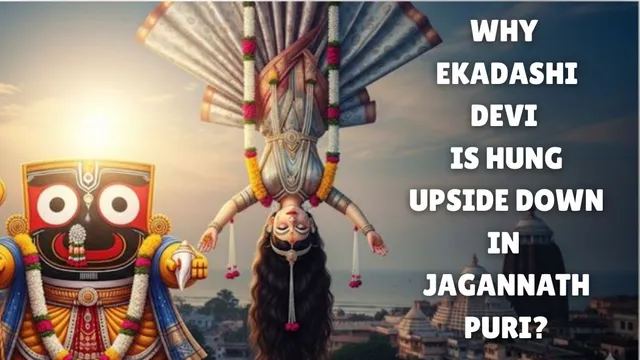
- By Kashish Rai
- Mon, 15 Sep 2025 02:11 PM (IST)
- Source:JND
The Jagannath Temple in Puri, Odisha is one of India's four sacred Dhams and is renowned for its mystical wonders and traditions. Interestingly, the tradition of observing Ekadashi here differs from the rest of India. People usually avoid grains, especially rice on Ekadashi but n Puri, Lord Jagannath is offered rice bhog, which devotees eagerly partake in as prasad, showcasing the unique customs and devotion that set this sacred pilgrimage site apart. It is believed that Ekadashi devi has been hung upside down at Jagannath Puri!
If you do not know why Ekadashi Devi is hung upside down in Puri, you are at the right place! Let us know the interesting story behind this belief below:
Who Is Ekadashi Devi?
Ekadashi Devi is a powerful goddess and is believed to be created by Lord Vishnu. She came into existence to defeat the demon Mura. The Padma Purana says that when Mura tried to attack Vishnu while he was meditating, Ekadashi Devi appeared and won against the demon in a tough fight. Happy with her bravery, Lord Vishnu gave her his blessing and named her Ekadashi. Thereafter, Lord Vishnu created the tradition of Ekadashi fasting, so people could purify their bodies and minds and seek blessings for liberation and prosperity.
ALSO READ: Ekadashi Shradh 2025: Date, Shradh Timings, Significance And Rituals
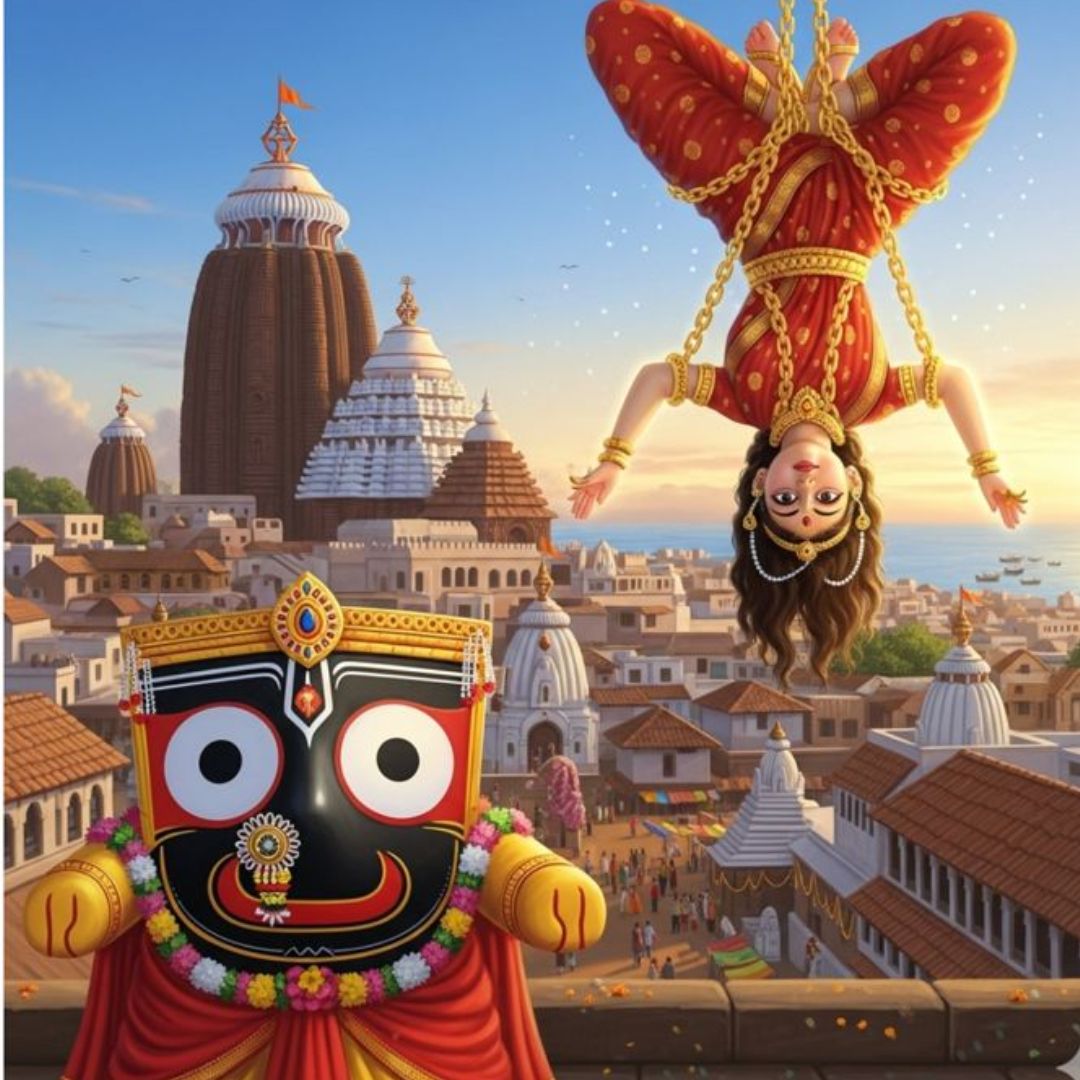
Ekadashi Devi has been hung upside down at the abode of Lord Jagannath, where rice is served as Mahaprasadam even on the day of Ekadashi tithi. (Image Source: Gemini AI)
Why Ekadashi Devi Is Hung Upside Down At Jagannath Puri?
It is believed that once, Lord Brahma - the creator of the universe visited Jagannath Puri Dham to obtain the blessings of Lord Jagannath and enjoy the divine prasadam. However, when he went there, all the prasad was given away to the devotees and all that remained was a few rice grains on a plate, which a dog was licking. Brahma's devotion was so pure that he decided to eat the stale rice with the dog, disregarding the fact that it was Ekadashi, a day typically observed with fasting and abstinence from grains.
Looking at this incident, Ekadashi devi came, scolding Lord Brahma for having rice on a day that was deemed sacred for fasting. However, Lord Jagannath noticed Brahma's pure devotion and intervened to decree that rules of fasting wouldn't apply in His dwelling place to His prasad. He claimed that pure devotion wouldn't be bound by strict observances, and therefore rice would be given and eaten in His temple during Ekadashi, going against the normal norms.
ALSO READ: Indira Ekadashi 2025: Date, Parana Time, Significance, Vrat Katha And Rituals
Since then, Lord Jagannath ordered the Ekadashi goddess to be hung upside down, indicating the turning of conventional Ekadashi practice on its head in Puri. Since then, the Jagannath Temple has served rice bhog during Ekadashi, distriburing it as prasad to the faithful. This odd custom, known as ‘Ulti Ekadashi’ indicates the strength of pure devotion and the mercy of the Lord, making eating rice on Ekadashi an auspicious deed at Jagannath Puri Dham instead of a sinful one.
(Disclaimer: This content includes advice providing generic information only. It is in no way a substitute for qualified spiritual or astrological opinion. Always consult a specialist for more information before adopting any measures.)