
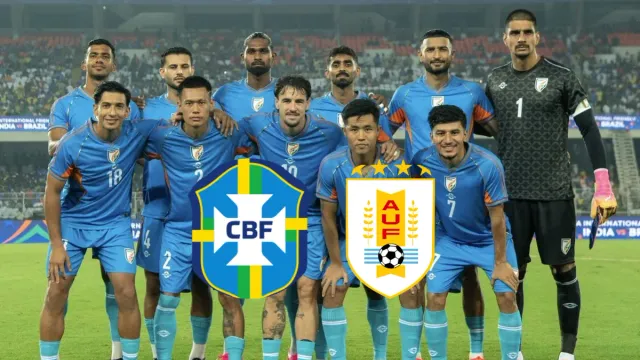
- India drew 1-1 with Panama before losing 4-0 to Brazil and 6-1 to Uruguay.
- India showed promising spells but struggled when Brazil and Uruguay raised the tempo.
- The friendlies offered valuable exposure, but India need sustained match practice.
For a few minutes at Salt Lake Stadium, Indian football fans had a reason to believe. Anirudh Thapa's equaliser against Uruguay sent thousands of supporters into celebration, offering a glimpse of what the national team could achieve against a world-class opponent.
But by the final whistle, India had suffered a 6-1 defeat, following a 4-0 loss to Brazil three days earlier.
Respect after the final whistle. 🇮🇳🤝🏻🇧🇷 #INDBRA #BlueTigers #IndianFootball https://t.co/lLkBsboVad
— Indian Football (@IndianFootball) October 3, 2026
The results were painful, but the bigger concern lies beyond the scorelines. India's friendlies against Panama, Brazil and Uruguay exposed a gap that cannot be closed by one good performance, a training camp or another high-profile international fixture.
ALSO READ: Can Infantino Dodge His Critics? Arsene Wenger Adds Another Twist To FIFA Election Debate
India began the international window with a 1-1 draw against Panama before facing two-time and five-time World Cup champions Brazil and Uruguay. While the Blue Tigers showed flashes of promise, the final two matches exposed their struggles to maintain that level for 90 minutes.
The Difference Was Not Just Talent
Against Brazil, India initially defended compactly and caught the visitors offside on several occasions. Against Uruguay, Thapa's goal demonstrated that Indian players could exploit opportunities when they appeared.
The problem was sustaining those moments. When Brazil increased the tempo, India's defensive organisation eventually broke down.
The equaliser was special. The celebration made it unforgettable. 💙 #INDURU #BlueTigers #IndianFootball https://t.co/P1CZeTfEGJ
— Indian Football (@IndianFootball) October 6, 2026
Uruguay were even more ruthless, repeatedly finding space behind the defence and punishing mistakes during transitions. India conceded 11 goals across the two matches, highlighting the difference in execution, decision-making and consistency.
These are not weaknesses that can be fixed overnight. Players develop the ability to recognise danger, react under pressure and make quicker decisions through regular exposure to demanding competitive football.
Indian Football Needs More Than Big Matches
India's 2025-26 Indian Super League season was severely disrupted and compressed, leaving clubs with only 13 league matches each. That meant fewer opportunities for players to develop through sustained competition.
The ongoing ISL season, which started on October 10, offers an opportunity to restore that rhythm. A longer campaign can give players more competitive minutes, help coaches assess their performances and allow young footballers to develop through repeated challenges.
However, the responsibility cannot rest on the league alone. Better grassroots programmes, stronger academies and a clearer pathway from youth football to the senior team are equally important. Other than that, India needs to be in the top five or ten nations in Asia to compete at the World standard.
Former Uruguay striker and current coach Diego Forlan has also stressed the need to build from the grassroots and give young players more opportunities to play.
ALSO READ: India Make History With 4-0 Win Over Malaysia, Qualify For U17 Women’s Asian Cup 2027
What Happens After The Spotlight Fades?
Playing Brazil and Uruguay gave India a test of their caliber and capacity. However the real benefit will depend on what follows these defeats.
Incredible 💙
— Indian Football (@IndianFootball) October 6, 2026
India need regular competitive fixtures, a stronger domestic structure and sustained investment in player development. Big international nights can inspire the next generation, but they cannot replace the everyday work required to produce better footballers.