

Every year, the Union Budget of India is not only eagerly awaited for its announcements but also for Finance Minister Nirmala Sitharaman’s significant saree choices on Budget Day. From 2019 until 2026, her saree selection has beautifully showcased the rich handloom heritage of India.
Every saree chosen by the finance minister represented art, skill and diversity of the respective states, along with the development priorities and support extended to these states. Today, the sarees have become a silent yet strong message of “Vocal for Local” and encourage weavers all over the country.
As the Union Budget 2026 is on the way, people are once again curious to see which handloom or traditional weave will be showcased this year. Let's take a look at the sarees worn by Nirmala Sitharaman on budget day from 2019 to 2026.
2026 – Maroon Kanjivaram Saree (Tamil Nadu)
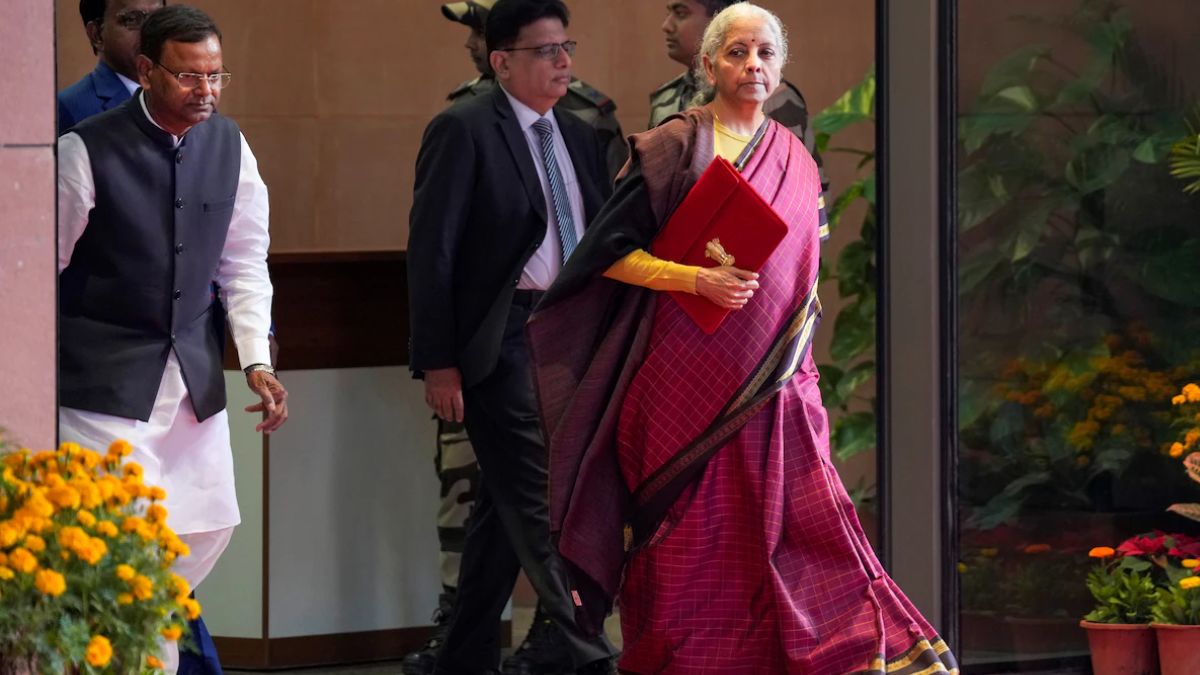 Nirmala Sitharaman's sarees for budget day 2026 (Image: ANI)
For the 2026 Budget, Nirmala Sitharaman chose a luxurious maroon kanjeevaram silk saree from Tamil Nadu, famous for its luxury and temple designs. The saree represented the best silk culture of India. Tamil Nadu remained in the focus of the budget for its textile, manufacturing, and industrial development.
2025 – Off-White Madhubani Print Handloom Saree (Bihar)
-1769930971827.jpg) Nirmala Sitharaman's sarees for budget day 2026 (Image: Instagram and ANI)
Nirmala Sitharaman's sarees for budget day 2026 (Image: Instagram and ANI)
In 2025, Nirmala Sitharaman opted for an off-white handloom saree with Madhubani art from Bihar. The saree was a tribute to folk art and women artisans. Bihar got projects to the tune of approximately Rs 59,000 crore, with a focus on infrastructure, education, skill development, and rural employment.
2024 – Blue Kantha Saree (West Bengal)
-1769931047284.jpg) Nirmala Sitharaman's sarees for budget day 2026 (Image: ANI)
Nirmala Sitharaman's sarees for budget day 2026 (Image: ANI)
During the Budget in February 2024, Nirmala Sitharaman chose a blue saree with Kantha embroidery from West Bengal. Kantha embroidery is a reflection of patience and storytelling in stitches. The budget emphasised the matsya (fisheries) sector, which is very important for the coastal economy of Bengal.
2023 – Red Ilkal Saree (Karnataka)
-1769931112239.jpg) Nirmala Sitharaman's sarees for budget day 2026 (Image: X)
Nirmala Sitharaman's sarees for budget day 2026 (Image: X)
The red Ilkal saree donned in 2023 represented power and tradition. Ilkal sarees are the pride of the handloom industry in Karnataka. In the same year, Karnataka got around Rs 5,300 crore, with emphasis on infrastructure, technology, urban development, and startups.
2022 – Brown Bomkai Saree (Odisha)
-1769931222733.jpg) Nirmala Sitharaman's sarees for budget day 2026 (Image: ANI)
Nirmala Sitharaman's sarees for budget day 2026 (Image: ANI)
In 2022, she wore a brown Bomkai saree from Odisha, which depicted tribal art and heritage. Bomkai weaving has a strong rural connection. In the same year, Odisha got a budget support of approximately Rs 12,000 crore, which helped the railway, mining, tribal and rural sectors.
2021 – White and Red Pochampally Saree (Telangana)
-1769931456644.jpg) Nirmala Sitharaman's sarees for budget day 2026 (Image: X)
Nirmala Sitharaman's sarees for budget day 2026 (Image: X)
For the Budget 2021, Nirmala Sitharaman chose a white saree with a broad red border from Pochampally, Telangana. Pochampally is known for its Ikat weaving. The saree was a testament to precision and craftsmanship. Telangana got schemes amounting to approximately Rs 6,100 crores.
ALSO READ: Budget 2026: FM Announces Rare Earth Magnet Corridor For Odisha To Break China’s Strategic Monopoly
2020 – Yellow Silk Saree (Tamil Nadu)
-1769931710417.jpg) Nirmala Sitharaman's sarees for budget day 2026 (Image: ANI)
Nirmala Sitharaman's sarees for budget day 2026 (Image: ANI)
In 2020, she decided to wear a bright yellow silk saree from Tamil Nadu, which represented positivity and power. Tamil Nadu, being a prominent textile industry and MSME hub, was allocated various welfare and development programs. The budget emphasised infrastructure development, industrialisation and job creation in Tamil Nadu.
2019 – Pink Mangalgiri Saree (Andhra Pradesh)
-1769931723343.jpg) Nirmala Sitharaman's sarees for budget day 2026 (Image: ANI)
Nirmala Sitharaman's sarees for budget day 2026 (Image: ANI)
In 2019, Nirmala Sitharaman opted for a pink Mangalgiri cotton saree from Andhra Pradesh, which was known for its strength and handwoven fabric. The saree represented the rich handloom tradition of the country. In 2019, the Union Budget focused on the hathkargha (handloom) sector, which encouraged weavers, rural artisans and small textile units in the state.