

Thrilling Facts About Solar Flares: Solar flares are intense bursts of energy that occur on the surface of the Sun. Solar flares occur when the magnetic energy that has been accumulated in the atmosphere of the Sun is suddenly released. Solar flares emit a large amount of radiation, as well as electromagnetic waves, into space at very high speeds.
Recently, ISRO (Indian Space Research Organisation) warned India about the possibility of a strong radio blackout because of higher solar activity, which is also called the “angry Sun.” This can impact radio signals, satellite communications, GPS, air traffic, and even power grids. Scientists are very keen to observe solar flares because their effects can be experienced in minutes to hours on Earth.
As the Sun is nearing its peak activity phase, such solar events are becoming more frequent and intense. Now, let's dig into 20+ exciting facts about Solar Flares.
Why ISRO Warned India of a Strong Radio Blackout
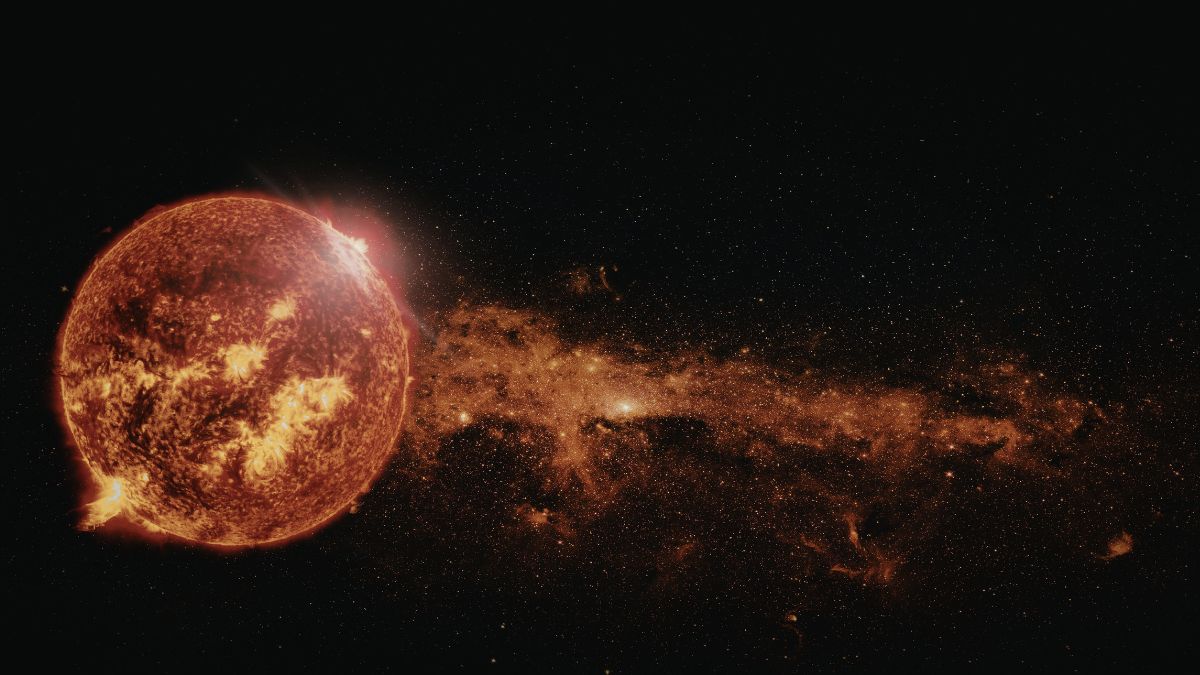 Solar flares (Image: Canva)
The warning was released by ISRO because the sun is witnessing a high intensity of X and M-class solar flares as of early February 2026, which emit high-energy radiation that can disrupt the ionosphere, the part of Earth’s atmosphere responsible for radio communication.
The current activity is being led by a large and unstable sunspot region, AR4366, which is rotating towards a direct Earth-facing position.
What Solar Flares Are and How They Form
1. Solar flares originate from sunspots on the Sun’s surface.
2. They are caused by the sudden release of magnetic energy.
3. Solar flares travel at the speed of light.
4. The energy released can equal millions of nuclear bombs.
5. They are classified as A, B, C, M, and X classes.
6. X-class flares are the most powerful and dangerous.
ALSO READ: What Are Solar Storms And How Do They Affect Earth? Everything You Need To Know
How Solar Flares Affect Earth
7. Solar flares can cause radio blackouts on Earth because they emit intense electromagnetic radiation, including X-rays and extreme ultraviolet rays.
8. These high-energy radiations can cause increased ionisation in the Earth's atmosphere, particularly in the lower ionosphere.
9. They can disrupt satellite communication systems. GPS accuracy can drop during strong solar storms.
10. Astronauts face radiation risks during flares.
11. Polar regions are affected more than equatorial areas.
12. Solar flares can heat Earth’s upper atmosphere.
Solar Flares and the “Angry Sun”
13. According to NASA, the Sun goes through an 11-year activity cycle of magnetic activity.
14. This cycle influences space weather, causing increased sunspots, flares, and coronal mass ejections that can affect Earth's satellites, communications, and power grids
15. The current cycle is becoming more active.
16. This phase is often called the “angry Sun” period.
17. Multiple flares can occur in a single day.
Monitoring and Safety Measures
18. ISRO continuously tracks solar activity using satellites.
19. Early warnings help protect communication systems.
20. Airlines adjust routes during strong solar events.
21. Power companies prepare for voltage instability.
22. Most solar flare effects are temporary and manageable.