
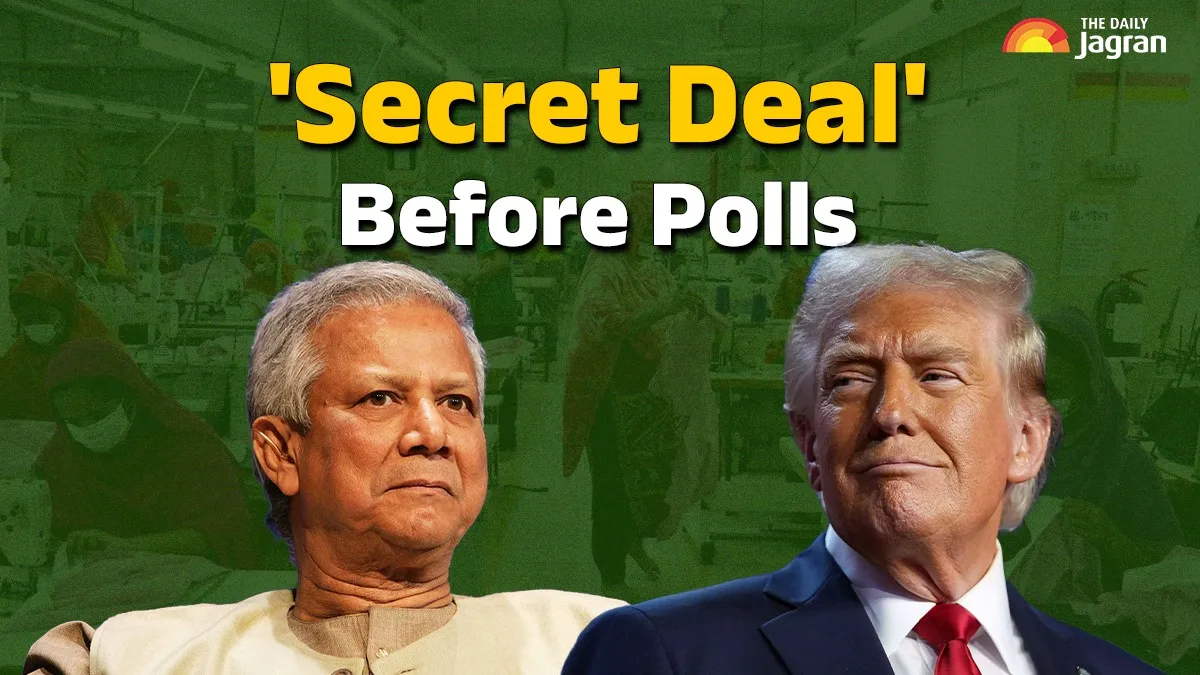
- Interim government rushing secret US trade deal pre-election.
- Deal targets lower tariffs for Bangladesh's vital garment industry.
- Concerns over transparency, mandate, and long-term economic burdens.
The unelected interim government led by Nobel laureate Muhammad Yunus in Bangladesh is reportedly rushing to finalise a secretive bilateral trade agreement with the United States, scheduled for signing on February 9, just three days before the country's general elections on February 12.
The report came days after India and America signed a deal with reduced rate of 18 per cent tariffs. Although this was not clear whether Dhaka is rushing to sign the pact after New Delhi got a better deal, it is obvious Bangladesh's crisis-hit garment industry would face more burnt.
Notably, the Trump administration had lowered the tariff on Dhaka last year from 37 per cent to 20 per cent, but now, India has edge of 2 per cent.
Why has secret deal raised concerns among Bangladeshi exporters?
However, the "unelected" government's move has sparked widespread concern among exporters, particularly in the garment and textile sector, which accounts for the bulk of Bangladesh's exports and employs millions.

According to a report published in local media Prothom Alo, the deal stems from ongoing negotiations amid US President Donald Trump's reciprocal tariff policies. In mid-2025, Bangladesh secured a reduction in proposed US tariffs from an initial 35-37 per cent to 20 per cent on its exports, primarily ready-made garments or RMGs, after high-level talks and commitments like purchasing US agricultural products, such as 2,20,000 tons of wheat.
Recommended For You
The upcoming agreement aims to further lower this 20 per cent rate, potentially offering preferential access or even duty-free entry for Bangladeshi garments made from US-imported cotton or fibers.
Yunus bootlicking gesture
In exchange, Bangladesh has reportedly agreed to conditions including increased imports from the US, no tariffs on e-commerce, withdrawal of export subsidies on certain products like fisheries, compliance with US intellectual property standards, and support for American positions in World Trade Organisation reforms.
The secrecy surrounding the pact, enforced by a non-disclosure agreement signed in June 2025. This has fueled criticism. Exporters and business leaders worry that an unelected regime lacks the mandate to bind future elected governments to long-term terms that could impose unknown economic burdens.
ALSO READ: Bangladesh's Interim Government Bans PM Sheikh Hasina's Awami League Under Anti-Terrorism Law
Shadow deal just before Bangladesh polls
Critics argue the rushed timing, right before polls, prioritises short-term gains for the garment sector over transparency and national sovereignty. Some outlets describe it as a "shadow deal" or "backroom betrayal," with fears it could flood Bangladesh's market with US goods, widen trade deficits, or limit policy flexibility.
The garment industry, Bangladesh's economic backbone exporting billions annually to the US, its largest market, remains vulnerable.
Bangladesh textile industry under strain
Recent tariffs have already reduced demand, leading to declining export values and volumes in late 2025, plus factory closures and job losses amid labor unrest. While lower tariffs could provide relief and stabilize the sector, opponents claim the opaque process risks unfavorable concessions that might hurt competitiveness long-term, especially as regional rivals like India secure better trade terms with the US and EU.
Yunus's administration has framed such engagements as diplomatic wins to protect jobs and exports amid global trade pressures. However, the lack of public details has amplified skepticism, with some viewing it as appeasement to Washington.