
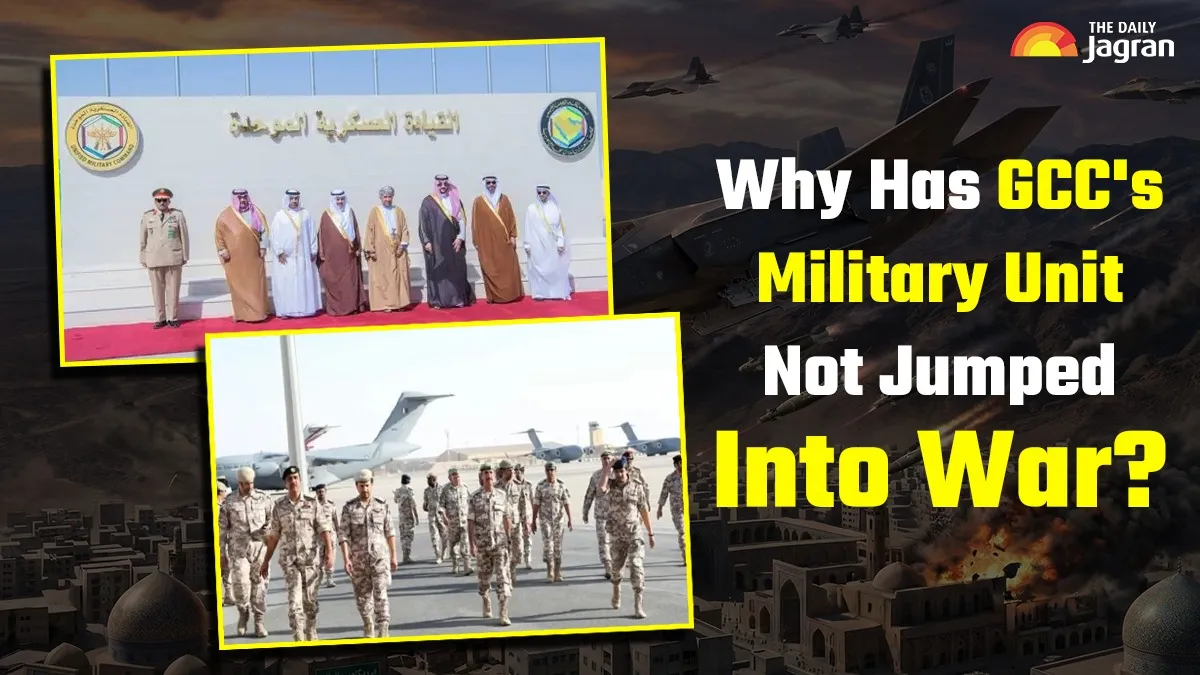
Middle East War: The key members - Saudi Arabia, UAE, Qatar, Kuwait, Oman, and Bahrain - of the Gulf Cooperation Council (GCC) have been attacked by the Islamic Revolutionary Guard Corps (IRGC) since the first day of the US-Israel-led war against Iran, February 28. Despite Iran targeting the key fuel installations of the US allies in the Middle East, the Unified Military Command of the Gulf Cooperation Council (GCC) has not retaliated. On March 18, GCC, Arab and Islamic nations - Qatar, Saudi Arabia, Syria, Türkiye, the United Arab Emirates, Azerbaijan, Bahrain, Egypt, Jordan, Kuwait, Lebanon and Pakistan - issued a joint statement after a key meeting of their foreign minister held in Riyadh. They denounced the Iranian attacks. The GCC nations remained mum on the armed retaliation.
Qatar LNG Output Capacity Reduced By 17% For 5 Years After Missile Hit
Qatar, which is a friend of Iran and played the role of mediator before the commencement of the war, has been severely affected by the ongoing war. Missile attacks on Qatar's Ras Laffan Industrial City have significantly disrupted global energy supplies, reducing the country's liquefied natural gas (LNG) export capacity by 17 per cent. Saudi Arabia, Kuwait and the UAE's fuel installations are also facing Iranian aggression.
ALSO READ: US Air Power Under Fire: How Many American Fighter Jets And Drones Lost In Iran War So Far?
Now, the question arises as to why the Unified Military Command of the Gulf Cooperation Council (GCC) is not taking direct military action against Iran?
There is a strategic rationale behind the endurance of the GCC nations. The primary reason is that it is not their war, but Israel and the US. Iran seldom poses a security threat to the other neighbouring countries. In fact, Iranian President Masoud Pezeshkian has apologised to the neighbouring countries for attacks a few days ago, asserting that Tehran would not strike "unless they attack first". The Iranian regime has reiterated on several occasions that it will target the US bases in the Gulf countries. However, the scenario changed after the US and Israel targeted Iran's key fuel installations.
Recommended For You
Another big reason is that the direct involvement of the Gulf countries would expand the war. The UAE, Saudi Arabia, Qatar, Kuwait and others know that they are highly vulnerable nations as their defence is not so strong. They solely depend on the US, which itself is struggling to counter the Iranian retaliation. Also, the Gulf Cooperation Council's Unified Military Command (UMC) is a coordination body, not an automatic military response organisation, like NATO.
Differences Among Gulf Nations
There are several differences among all GCC members. Qatar and Oman share good relations with Iran, while Saudi Arabia and the UAE take Iran as a threat. Every nation prioritises its own interests first. All GCC members are oil exporters, and they compete against each other. The Unified Military Command is operationally weak with limited joint command, and it lacks logistic support.