
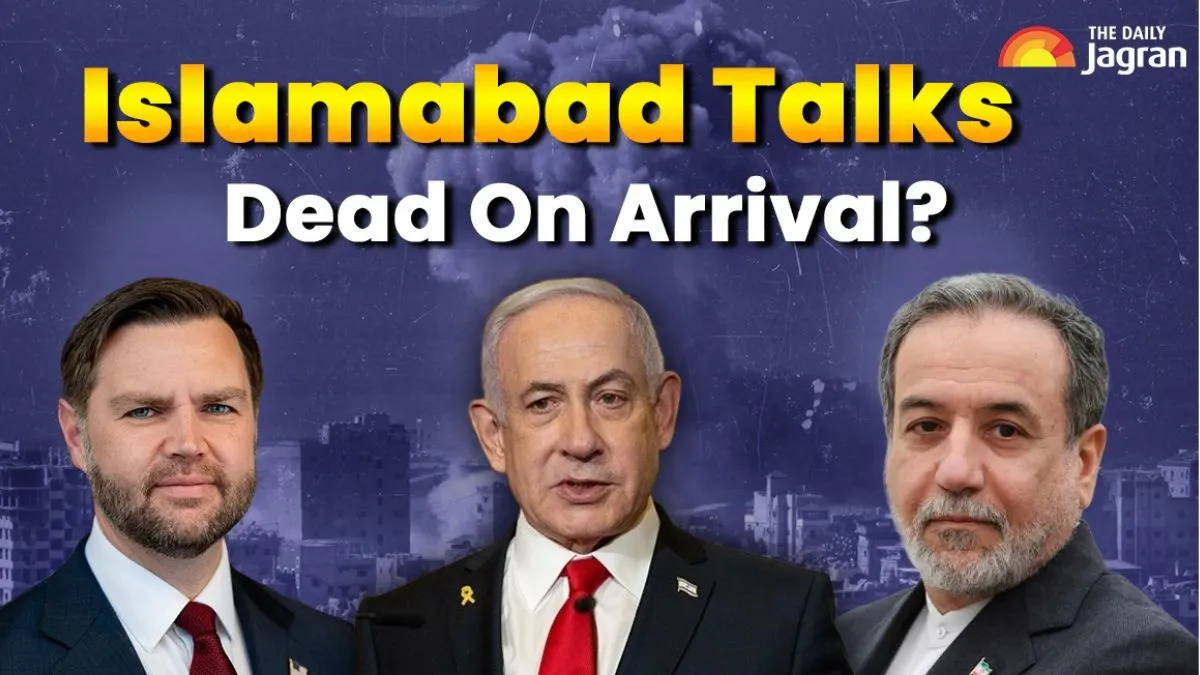
The United States and Iran are set to sit at the negotiation table after dragging the conflict in the Middle East for more than a month. The high-stakes in-person talks between the two countries, hosted by Pakistan, is set to take place on Saturday. This comes after US President Donald Trump on Tuesday announced a two-week ceasefire between Washington and Tehran.
Pakistan To Host Peace Talks
The meeting will take place at the Serena Hotel in Islamabad, which has now been turned into a high-security zone. The talks aim to strengthen the temporary ceasefire and prevent further escalation in the region, which has reportedly claimed more than 3,000 lives so far. This diplomatic moment is closely watched by everyone as both sides have already accused each other of breaching the ceasefire agreement. Moreover, Pakistan’s role as a mediator and host has also grabbed the attention after Prime Minister Shehbaz Sharif’s ‘draft’ gaffe in the US-Iran peace deal went viral.
Can US-Iran Peace Talks Fail?
Will the talks be successful? What the negotiations would cover? What would happen if the talks fail are some of the questions sparking debate online. The uncertainty stems from the fact that within hours of the ceasefire, air raid sirens were activated across Gulf states, including Saudi Arabia, Qatar, Kuwait and Bahrain. The world already saw the temporary deal collapse from the beginning when Israel pounded Lebanon with missiles on April 9.
Recommended For You
The attack on Lebanon left everyone confused about whether the county was part of it or not. When PM Sharif had announced the truth, he had called it as "an immediate ceasefire everywhere, including Lebanon and elsewhere." However, Israeli Prime Minister Benjamin Netanyahu, backing the agreement, clarified that the “two-week ceasefire does not include Lebanon." White House Press secretary Karoline Leavitt also emphasised that Lebanon is not part of the cease-fire.
How Israel’s Absence Complicates Reaching Truce?
The discussion around Lebanon is significant as Iran in its 10-point proposal has clearly demanded a halt to military operations against its allied armed groups across the region, including Hezbollah. While the US has not launched strikes in Lebanon, its ally, Israel has extensively conducted military operations in the region. On Thursday, the Israel Defense Forces (IDF) announced that it had killed nephew of Naim Qassem, the leader of the Iran-backed Lebanese group Hezbollah, in a strike on Beirut.
Iranian Foreign Minister Seyed Abbas Araghchi has also explicitly stated that the terms of ceasefire are “clear”, and the US must choose carefully between truce or continued war through Israel. He wrote on X, “The Iran–U.S. Ceasefire terms are clear and explicit: the U.S. must choose—ceasefire or continued war via Israel. It cannot have both. The world sees the massacres in Lebanon. The ball is in the U.S. court, and the world is watching whether it will act on its commitments.”
The Iran–U.S. Ceasefire terms are clear and explicit: the U.S. must choose—ceasefire or continued war via Israel. It cannot have both.
— Seyed Abbas Araghchi (@araghchi) April 8, 2026
The world sees the massacres in Lebanon. The ball is in the U.S. court, and the world is watching whether it will act on its commitments. pic.twitter.com/2bzVlHFKgi
While officials are set to meet, all these situations remain a point of concern, casting a doubt over the results of Islamabad Talks 2026. It is further fuelled by the fact that Israel has not been invited for negotiations in Pakistan.
You May Also Like To Watch: