
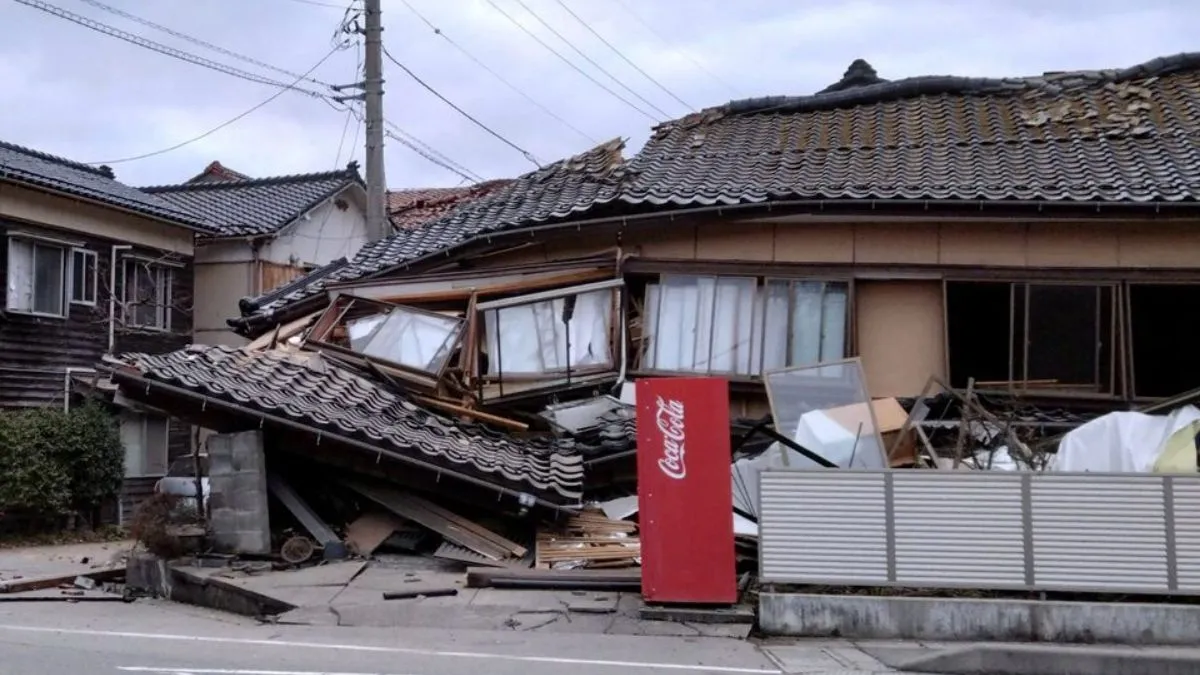
Japan earthquake news: Japan’s weather authority has issued its highest-level warning for a possible 'megaquake' this week, urging millions living along the Pacific coast to stay alert and be prepared to evacuate at short notice.
What Is Megaquake?
A megaquake is defined as a seismic event measuring magnitude 8.0 or higher. According to the Japan Meteorological Agency (JMA), the current conditions slightly increase the risk of such a large-scale disaster along the Pacific coast stretching from Hokkaido down to Chiba, though the notice is not a confirmed prediction. Officials say the warning is meant to ensure the public remains ready for rapid evacuation should a major aftershock occur.
The rare advisory came a day after a powerful 7.6-magnitude earthquake struck late Monday night off the coast of Aomori, sending tsunami warnings across the northern and eastern coasts and prompting urgent checks at several nuclear power facilities. This is the first time since 2022 that Japan has raised its megaquake caution to the highest tier.
Injuries, Evacuations, And Tsunami Warnings
Monday’s quake struck at around 11:15 pm, roughly 80 km off Aomori’s coast, triggering waves up to 70 cm in Kuji port and between 50–70 cm in other communities. Nearly 33 people were injured, most due to falling objects, and more than 90,000 residents were temporarily evacuated to higher ground.
Recommended For You
Bullet train operations were halted overnight, electricity was cut to 800 households, and around 200 passengers were stranded at Hokkaido’s New Chitose Airport after parts of the terminal ceiling collapsed. But operations were restored by the morning.
Prime Minister Sanae Takaichi said an emergency task force had been activated. “We are putting people’s lives first and doing everything possible,” she said, urging residents to be prepared for strong aftershocks throughout the week.
Nuclear Plants Under Watch
The tremor put renewed focus on Japan’s nuclear safety. The Nuclear Regulation Authority (NRA) confirmed that about 450 litres of water spilled from a spent-fuel cooling pool at the Rokkasho reprocessing plant, but stressed the water level remained normal and posed no safety threat.
Safety checks were conducted at other facilities, including power plants operated by Tohoku Electric Power and Hokkaido Electric Power, and no abnormalities were found. At Fukushima Daiichi, the IAEA reported no issues but said the release of ALPS-treated water had been temporarily suspended as a precaution.
What Residents Should Do
Authorities have issued clear instructions for preparedness:
Review local evacuation routes
Keep at least three days’ emergency supplies
Secure heavy items in homes
Ensure access to food, water, lights, and portable sanitation
Officials stressed that preparedness is critical, especially in regions that still remember the 2011 Tōhoku earthquake and tsunami, which killed nearly 20,000 people and devastated Fukushima.
With inputs from agency.