
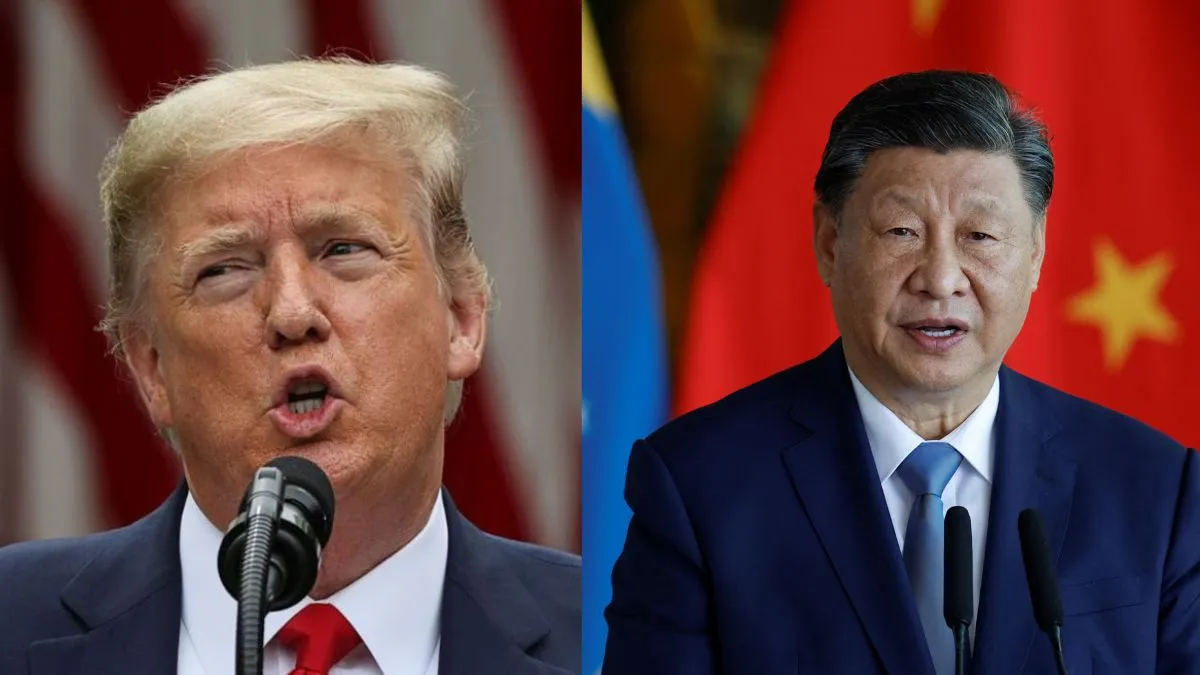
As Washington recalibrates its strategy toward Venezuela, oil is no longer the only resource drawing American attention. The United States is increasingly eyeing Venezuela’s rare earth minerals, critical inputs for advanced technologies and defence systems, but faces stiff competition from China, which has entrenched economic, political and industrial influence in the country.
Rare earth elements are essential for manufacturing smartphones, electric vehicles, wind turbines, artificial intelligence hardware and military equipment such as radars and guided missiles. China currently dominates the global rare earths market, controlling more than 90 per cent of refining and processing capacity. That dominance has become a strategic vulnerability for the US, especially as Beijing has previously imposed export controls to gain leverage in its trade disputes with Washington.
Why Venezuela Matters To Washington
For the US, Venezuela represents a potential opportunity to diversify supply chains closer to home and reduce reliance on China. Venezuela is believed to have notable rare earth occurrences, mainly in its southern Guayana Shield region, an area already known for gold, diamonds, iron ore and bauxite. However, independent verification of Venezuela’s rare earth reserves remains limited.
Recommended For You
In December 2025, Rare Earth Exchanges reported that the country’s resources do not rival those of China, Australia or the US, instead consisting largely of reported occurrences such as monazite-bearing sands and thorium-associated minerals. Venezuela could play a supporting role in reducing US dependence on China.
Earlier in an interview, Scott Besent said that on his first day in office, President Trump issued an Executive Order to establish the US as a global leader in rare earths. “We are loosening the chokehold China has on this critical sector,” he added. “South Carolina led the way, and the US is taking back control of its supply chains.”
On his first day in office, President Trump issued an Executive Order to establish the US as a global leader in rare earths. Now, a South Carolina-based company has developed the first magnet made in America in 25 years.
— Treasury Secretary Scott Bessent (@SecScottBessent) November 7, 2025
We are loosening the chokehold China has on this critical… pic.twitter.com/Zr788KwA0j
ALSO READ: Shooting At Funeral Event: Utah Church Shooting Leaves Two Dead, Over 8 Injured in Salt Lake City
China’s Deep Footprint
China, however, stands firmly in the way. Beijing has spent years embedding itself in Venezuela’s economy, backing state oil company PDVSA financially and establishing a strong presence in mining operations linked to critical minerals. Illicit mining networks in regions like the Arco Minero del Orinoco are also believed to funnel minerals through smuggling routes that ultimately benefit Chinese firms, complicating any effort at transparent extraction.
China’s influence extends beyond minerals. Of the roughly 900,000 barrels of oil Venezuela exports daily, an estimated 800,000 barrels go to China. Over the years, Caracas has also accepted yuan and other non-dollar currencies for crude, deepening its alignment with Beijing and the BRICS bloc.
Geopolitical Stakes
From Washington’s perspective, Venezuela has increasingly become a strategic outpost for rival powers in what the US has traditionally viewed as its sphere of influence. While oil production has collapsed, from over 3 million barrels a day in the early 2000s to under 1 million today, Venezuela’s broader resource base keeps it geopolitically relevant.
Disrupting China’s grip on Venezuela’s critical minerals will be difficult, and outright control remains unlikely. The rare earths contest highlights how Venezuela has become a complex geopolitical chessboard, where oil, minerals and great-power rivalry now intersect.
ALSO READ: US: Deadly Shooting Rocks Kentucky State University, One Killed; Suspect Arrested