
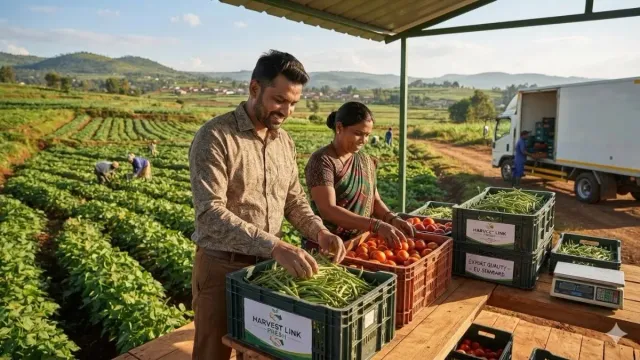
- Market-linked farming ensures price certainty and stable farmer incomes.
- Direct market connections empower farmers to transition to entrepreneurship
- Government policies support FPOs and food processing infrastructure.
For generations, the Indian farmer has been caught in a cycle–sow what previous generations cultivated, sell at whatever price the mandi offers, and hope the monsoon is kind– that leaves little room for any ambition. Entrepreneurs who cracked modern farming believe that the trouble with traditional commodity farming is the lack of price certainty. Hence, this practice could only lead to survival, not entrepreneurship.
Farmers growing paddy, wheat or cotton have little control over what they receive at harvest; earnings are shaped by global supply, intermediary margins and market fluctuations, of which the average farmer has little or no understanding.
According to the National Statistical Office's Situation Assessment Survey of Agricultural Households (2019), the average monthly income of an agricultural household in India was just Rs 10,218. SBP Pattabhi Rama Rao, Managing Director, Gourmet Popcornica Pvt. Ltd, believes that stronger market linkages remain one of the most effective ways to reduce this volatility.
Meanwhile, changing weather patterns and uncertain seasons are also posing challenges for farmers.
"Farmers need more than just a good harvest; they need to know that there is a market for what they grow. When farmers have clear market demand, fair pricing and assured buyers, they can plan better and take the confidence to move into crops that offer better opportunities,” Rao said.
Recommended For You
We have seen this with popcorn maize, where connecting farmers directly with the market has helped them improve productivity and build more stable incomes. I believe the next phase of Indian agriculture will be about building these stronger connections between farmers and the markets, so that farming becomes a more sustainable and rewarding livelihood,” he added.
A sector on a genuine growth curve
India's food processing sector, valued at Rs 30.5 lakh crore ($354.5 billion) in 2024, is projected to reach $535 billion by FY26. Contributing 8 per cent of manufacturing GVA and 13% of exports, it is one of the economy's fastest-formalising sectors built on farm produce.
Snacking is a key growth driver, with the branded market valued at Rs 50,590 crore in 2025. Popcorn, worth $367–$390 million, is growing at 12–13 per cent CAGR toward 2030, fueled by home entertainment and gourmet demand. For popcorn maize farmers, this ensures sustained, predictable offtake.
Market-linked farming changes the equation
Market-linked farming works by connecting production with demand before the crop is even sown. Through contract farming, Farmer Producer Organisations (FPOs), cooperatives or direct procurement partnerships, farmers cultivating for a defined market benefit from price transparency, assured offtake, quality inputs and technical guidance. Speciality crops – popcorn maize, spices, seed production, mustard seeds, oilseeds, high-value horticulture, etc. – are grown to meet specific demand, letting producers participate in organised value chains that reward quality and consistency.
“We have seen farmers successfully transition from conventional crops to speciality popcorn maize through such market-linked cultivation. With agronomic support, transparent pricing and assured access, they are better equipped to improve productivity, manage risk and build resilient incomes,” Rama Rao noted.
Also Read: Empowering Gig Economy: PFRDA Offers Rs 99 Retirement Plan For Gig Workers
A popcorn maize story with its own momentum
Maize deserves special mention, since national dynamics mirror what we see on the ground. Demand is projected to rise from around 50 million tonnes in 2025-26 to nearly 72 million tonnes by 2030-31, per a recent FICCI-YES Bank study, driven by poultry feed, ethanol blending and industrial starch use – with popcorn specifically flagged as a rising demand centre.
Production has grown too, with India producing 55 million tons of maize in 2026 (source: The Economic Times), but productivity lags global benchmarks, and ethanol distilleries have tightened supplies in several pockets. For a quality-sensitive segment like popcorn maize, this is, if anything, an argument for dedicated contract cultivation: a processor committing to a defined volume and price band well ahead of the season insulates its farmers from that wider volatility.
Policy is beginning to meet the moment
Government policy is increasingly supportive. The 10,000 FPOs scheme, completed in early 2025 with a Rs 6,865 crore outlay, now connects 30 lakh farmers—40 per cent women—to market-led farming. Complementary initiatives like the Pradhan Mantri Kisan Sampada Yojana and food processing PLI schemes are further bolstering infrastructure and digital access.
Supporting this, a 2022 ICRIER study indicates that contract farming can boost farmers' net incomes by 25–40% compared to traditional mandi sales, encouraging stronger partnerships across the value chain as consumer demand for quality grows.
The Road Ahead
This transition is not without friction. It depends on trust, transparent contracts, timely payments and fair pricing, and needs sustained investment in farmer education, storage, logistics and extension services. Rising competition for maize between food, feed and fuel is a reminder that policy must keep protecting farmers' interests even as it encourages innovation. No single model can serve every farmer or crop, and mandis will remain essential. However, as agricultural markets specialise further, stronger market linkages will only grow more important for rural livelihoods.
“Our experience at Gourmet Popcornica has reinforced what is becoming evident across the sector: when farmers have reliable market access, transparent pricing and long-term partnerships, they gain the confidence to invest, innovate and plan for the future,” Rama Rao Highlighted.
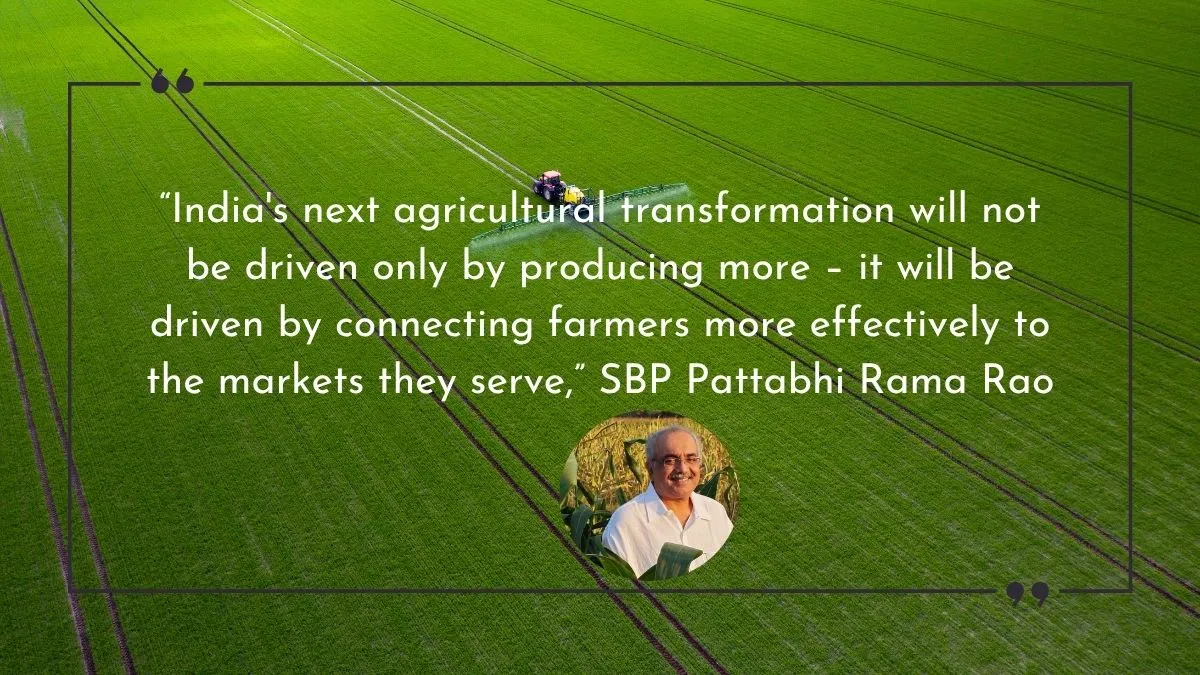
India's next agricultural transformation will not be driven only by producing more – it will be driven by connecting farmers more effectively to the markets they serve, he emphasised.