
- By Priyanka Payal
- Fri, 23 Jun 2023 05:17 PM (IST)
- Source:JND
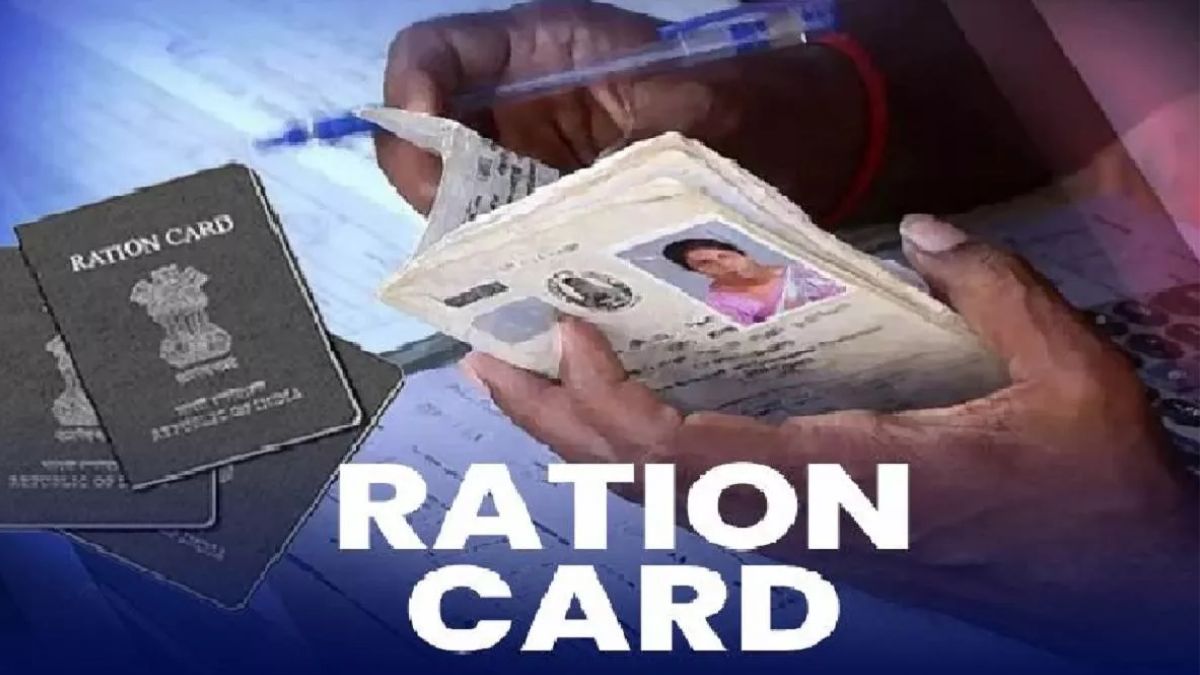
For Indians, a Ration card is a very important document which is also used as ID proof. Along with this, a ration card is also used to get subsidized ration.
The state government categorises people and issues different ration cards depending on their income level.
What Is a Ration Card?
A ration card is an official document issued by concerned state governments. Through this card, eligible households can get food grains at subsidized rates.
Earlier, based on respective state governments’ identification, eligible households were allowed to buy food grains at subsidised prices through the Targeted Public Distribution System (TPDS).
In 2013, the government passed the National Food and Security Act (NFSA) to provide fixed quantity food grains to people at affordable rates. At present, those state governments which have implemented the NFSA issue two types of ration cards to the qualifying household in their respective states.
Five types of ration cards
In India, the five types of ration cards provided under the NFSA and TPDS include:
· Priority Household (PHH) ration card - This card is provided to households that fulfil the eligibility criteria fixed by the respective state governments. Every household is eligible to get 5kg of food grains per person each month.
· Antyodaya Anna Yojana (AAY) ration card - AAY is issued to those households that are identified by the state governments. Each household is eligible to get 35kg of food grains per month per family.
· APL (Above Poverty Line) ration card - This card is issued to households living above the poverty line.
· BPL (Below Poverty Line) ration card - This card was issued to households living below the poverty line.
· Annapoorna Yojana (AY) ration card - The state government issues this card to older people who are poor and above 65 years.
One should note that the APL, BPL and AY ration cards are no longer issued in India. Currently, only the PPH and AAY cards are issued under the NFSA.