

UPS vs NPS vs OPS: The Union Cabinet approved the Unified Pension Scheme (UPS) - a new and comprehensive pension scheme for the employees of the central government with an amalgamation of features of both, the current National Pension Scheme (NPS) and Old Pension Scheme (OPS). Catering to the long-standing demand of government employees, the Modi government delivered the bold move of assuring a fixed pension amount for after retirement.
The assured pension refers to a specific and predetermined sum, which the employee is entitled to receive regularly after retirement. The assured pension provides much-needed financial stability and social security to the employees.
What Is Unified Pension Scheme (UPS)
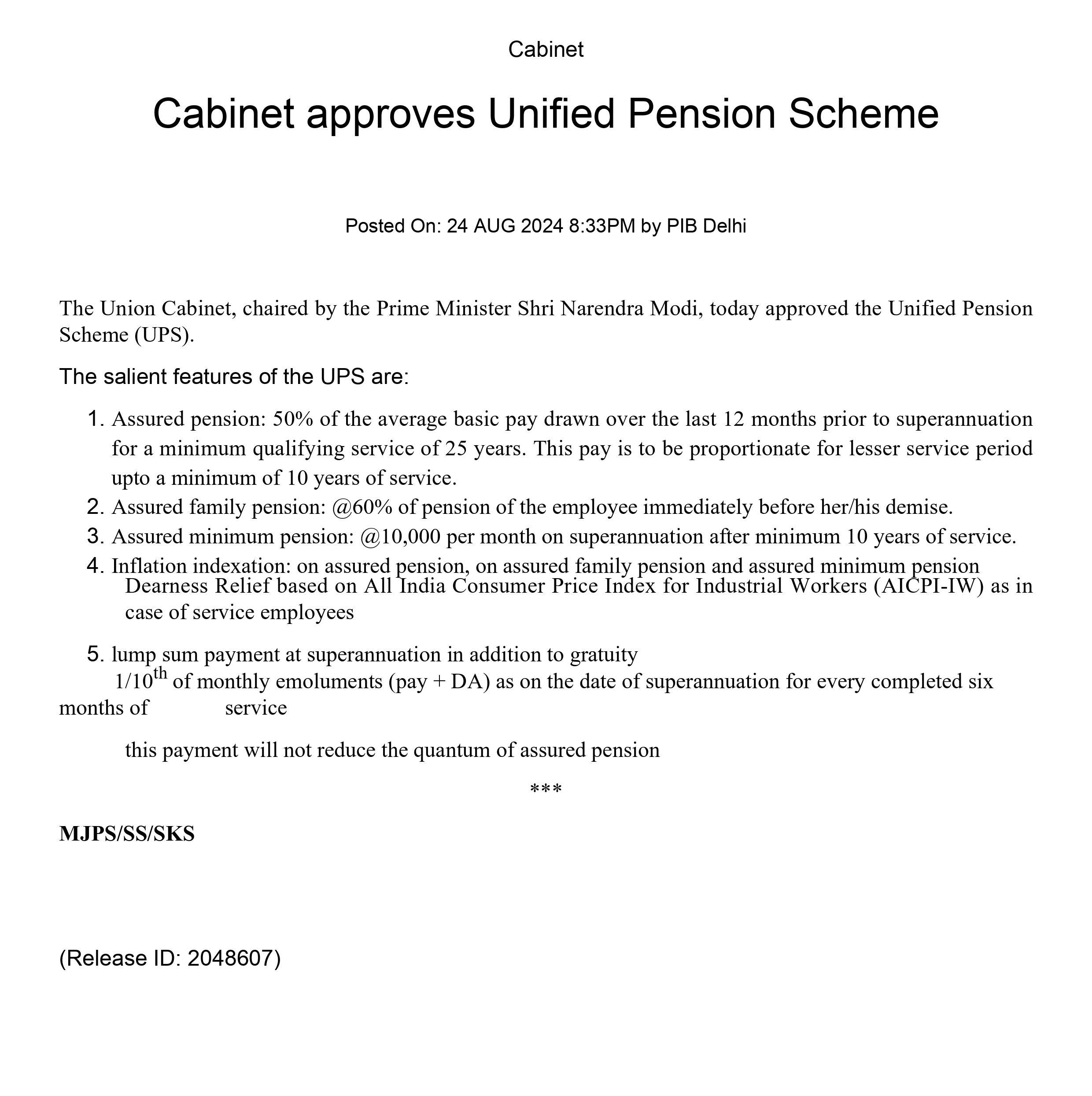
As per the provisions of the newly launched UPS scheme, government employees will receive an assured monthly pension amount equal to 50 per cent of a 12-month average of their last drawn salary. The scheme also promises an assured family pension and minimum pension for government employees.
Set to benefit over 23 lakh central government employees, UPS has the following key provisions.
1. Assured Pension: Government employees, who have served a minimum of 25 years in the service, will be eligible for an assured pension which will be calculated as 50 per cent of the average basic pay drawn over the last 12 months before superannuation.
2. Assured Family Pension: The new scheme not only provides social security to the employee him/herself but to the family as well. In case of untimely demise of the employee, their spouse will get 60 per cent of the salary drawn at the time of death, as a family pension.
3. Assured Minimum Pension: For employees with at least 10 years of service, UPS promises an assured minimum pension of Rs 10,000. "Assured Minimum Pension @10000 per month on superannuation after minimum 10 years of service," a cabinet statement stated.
4. Inflation Adjustment: All three pensions - assured pension, assured family pension and assured minimum pension - will be adjusted as per the rates of inflation. A Dearness relief will be applicable based on the All India Consumer Price Index for Industrial Workers (AICPI-W) as in the case of serving employees, the statement stated.
5. Lump-Sum Payment At Retirement: In addition to gratuity, a provision stipulates a lump-sum payment to the employee at the time of retirement. The 10 per cent of monthly salary (pay + DA) as of the date of superannuation for every completed six months of service will constitute the lump-sum payment. This payment will not reduce the amount of assured pension.
What Is National Pension Scheme (NPS)
The National Pension Scheme was first introduced in January 2004 by the then-Atal Bihari Vajpayee government. The scheme was aimed at replacing the Old Pension Scheme, which had a fixed pension amount as a monthly payment to the employee post-retirement. Unlike the previous schemes, the NPS was a long-term, voluntary investment program designed for retirement purposes.
ALSO READ: Unified Pension Scheme: What Are Key Promises For Government Employees | Five Points
Important Features Of National Pension System (NPS)
1. Pension and Investment Growth: The NPS provides a pension after retirement, along with the opportunity for substantial investment growth. When subscribers reach retirement age, they can withdraw part of their accumulated savings, while the rest is used to provide a regular monthly income, ensuring financial stability after retirement.
2. Types of Accounts: The NPS has two types of accounts:
- Tier 1 Accounts: Funds in Tier 1 accounts are meant for long-term retirement savings and can only be withdrawn after retirement.
- Tier 2 Accounts: These accounts offer more flexibility, allowing for withdrawals at any time, making them suitable for those who might need early access to their savings.
3. Withdrawals and Tax Benefits: Upon retirement, individuals can withdraw up to 60% of their total savings from the NPS, and this amount is tax-free. The remaining 40% must be used to purchase an annuity, which provides a pension that is roughly 35% of the person’s final salary before retiring.
4. Tax Deductions: Under Section 80CCD of the Income Tax Act, individuals can claim tax benefits for NPS contributions up to a maximum of Rs 1.5 lakh per year.
5. Tax-Free Lump Sum: The 60% lump sum withdrawal option at retirement is tax-free, making NPS an attractive choice for retirement planning, as it provides both a steady income and the flexibility of a significant one-time payout.
What Was the Old Pension System
Under the Official Pay Structure (OPS) of the old pension system, the pension for government employees, both at the central and state levels, was set at 50% of their last drawn basic pay, similar to the Universal Pay Structure (UPS). Along with it, a Dearness Allowance (DA) was provided, calculated as a percentage of the basic salary, to account for the rising cost of living.
When the government increases the Dearness Allowance, it also raises the Dearness Relief for retirees.
Under the Old Pension Scheme (OPS), retirees are guaranteed 50% of their salary as a pension, funded entirely by the government. Employees contribute to a General Provident Fund (GPF), which is paid out with interest at retirement. OPS also provides a gratuity of up to Rs 20 lakh. If a retiree passes away, their family continues to receive the pension. Notably, no salary deductions are made for pension contributions under OPS.