
- By Shivam Shandilya
- Sat, 02 Sep 2023 07:34 AM (IST)
- Source:JND
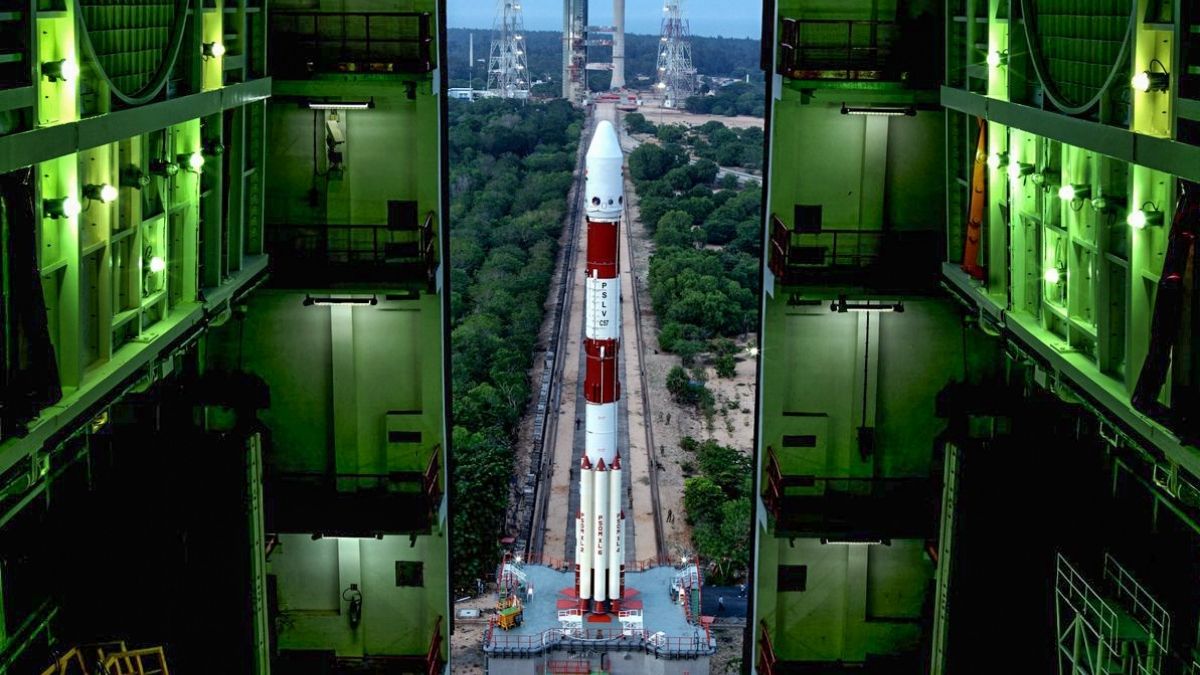
Aditya-L1 Mission: The Indian Space Research Organisation (ISRO) is all set for the launch of Aditya-L1, India's first solar space observatory mission, after several years of development. It is scheduled to be launched at 11.50 a.m. on Saturday, September 2, from the Satish Dhawan Space Centre in Sriharikota. Aditya L1 will be launched on the Polar Satellite Launch Vehicle (PSLV) and will take a similar approach to Chandrayaan-3.
Aditya-L1 Mission: Here Are Updates On The Mission:
1. The Chairman of ISRO, S. Somanath, on Friday offered prayers at a temple near the Satish Dhawan Space Centre, Sriharikota, for the success of India's rocket mission to the Sun.
2. "I came here to pray to Chengalamma Parameshwari for giving us strength to make this launch successful," he told reporters after offering prayers.
3. Speaking about the mission, Somanath said that the countdown has started for the PSLV-C57 Aditya-L1 mission, which will be launched at 11.50 a.m. on Saturday.
4. "It will take almost an hour for the satellite to reach the required location and inject. The Aditya L1 mission is to study the Sun. It will take another 125 days to travel from Earth to the L1 point from where the satellite will look at the Sun," he said.
5. On Friday morning, a group of ISRO scientists offered prayers at the Tirumala temple.
6. The Aditya-L1 spacecraft is designed to provide remote observations of the solar corona and in situ observations of the solar wind at L1 (Sun-Earth Lagrangian point), which is about 1.5 million km from the Earth.
7. Aditya-L1 will be the first dedicated Indian space mission for observations of the sun to be launched by the Bengaluru-headquartered space agency.
8. It will carry the seven payloads to orbit to observe the photosphere, chromosphere, and outermost layers of the sun's atmosphere.
9. "Aditya in Sanskrit means the Sun. L1 (about 1.5-million-km from Earth) refers to Lagrange Point 1 of the Sun-Earth system. For common understanding, L1 is a location in space where the gravitational forces of two celestial bodies, such as the Sun and Earth, are in equilibrium. This allows an object placed there to remain relatively stable with respect to both celestial bodies," Isro said.
10. The mission is the result of a decade of work conducted by the scientists of ISRO, the Pune Inter-University Centre for Astronomy and Astrophysics, and other organisations.
(With input from agencies)