
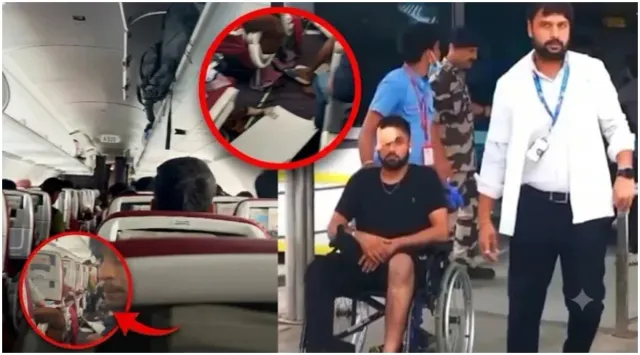
The pilot-in-command of the Air India Phuket-Delhi flight that suffered turbulence has tested positive for a psychoactive substance in the confirmatory testing, according to a lab report released on Tuesday. According to media reports, the pilot allegedly pilot had smoked marijuana (weed).
In the initial tests just after the flight landed, as part of the standard Operating Procedures (SOP), the pilot was reported to have tested positive. However, there was no official word on the test results. Instead, the samples were sent for confirmatory testing.
In a statement, the Civil Aviation Ministry said, "The screening test in respect of the Pilot-in-Command (PIC) indicated a result requiring confirmatory testing. Samples have accordingly been sent to the designated laboratory for confirmatory analysis, and the final report is awaited."
Recommended For You
We Are Taking It Very Seriously: Aviation Minister
Speaking on the issue, Civil Aviation Minister Ram Mohan Naidu Kinjarapu said, "That issue we are continuously studying. We have also asked DGCA (Directorate General of Civil Aviation) for updates on that. We are taking it very seriously. If we feel that the present regulation is not up to the mark, we will respond to it very seriously and improve whatever needs to be done."
#WATCH | Delhi: On possible reforms in regulations on substance abuse by pilots, Civil Aviation Minister Ram Mohan Naidu Kinjarapu says, "That issue we are continuously studying. We have also asked DGCA (Directorate General of Civil Aviation) for updates on that. We are taking it… pic.twitter.com/p0QrSZ7G0v
— ANI (@ANI) August 11, 2026
Notably, on August 4, Air India flight AI2379 (Aircraft A320, VT-EXO) suffered a sudden altitude drop of approximately 300 feet mid-air. The plane subsequently stabilised and landed safely in Delhi.
The mid-flight scare left 17 injured out of a total of 137 passengers and eight crew members.
AAIB starts probe, includes teams of foreign experts
The Aircraft Accident Investigation Bureau (AAIB) launched an investigation into the incident and put both the pilots off-roster.
The probe so far has revealed that the aircraft's three hydraulic systems recorded a combined nine fault messages within one minute. It is an extraordinary technical situation and so is being analysed by France's prestigious investigation agency, Bureau of Enquiry and Analysis for Civil Aviation Safety (BEA).
ALSO READ: AAIB's Air India Phuket-Delhi Turbulence Probe To Include Airbus, International Aviation Experts
The AAIB has roped in foreign aircraft experts, Airbus team and BEA team for a technical role in decoding complex data from the Flight Data Recorder (FDR) and Cockpit Voice Recorder (CVR). The AAIB has also inducted the experts to resolve the mystery of aerospace software glitches.
AAIB is also looking at videos recorded by the passenger, statements of cabin crew and radar data combined with black box time-sync. It will help in pinpointing whether the turbulence or the hydraulic fault message came first, and what impact this situation had on the aircraft's systems.
ALSO READ: Clear-Air Turbulence: Why Flights Suddenly Turn Bumpy in Clear Skies
DGCA orders special safety inspection
On the other hand, India's aviation regulator body, the Directorate General of Civil Aviation (DGCA), has ordered a special safety inspection of the hydraulic and flight control systems of A320 Neo aircraft.