
- By Vivek Raj
- Wed, 06 Mar 2024 09:09 AM (IST)
- Source:JND
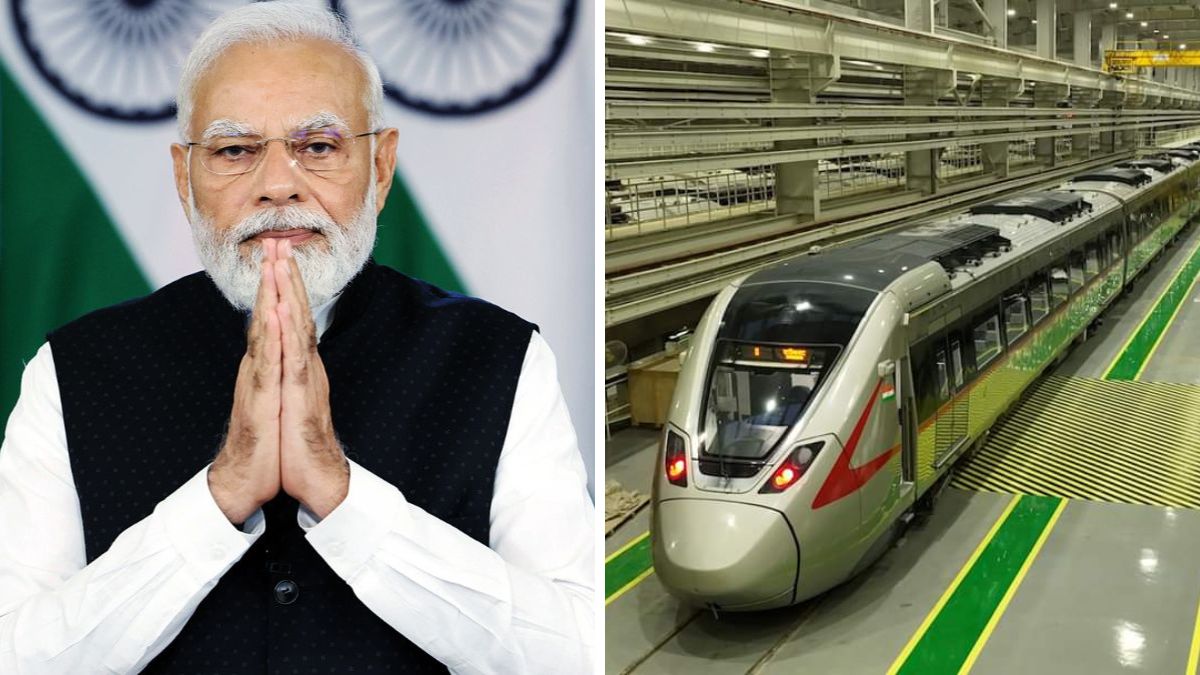
Prime Minister Narendra Modi inaugurated the 17-kilometer extension of the Delhi–Ghaziabad–Meerut Regional Rapid Transit System (RRTS) corridor, running from Duhai to Modi Nagar North on Wednesday. Additionally, PM Modi flagged-off the Namo Bharat train on this section from the Muradnagar RRTS station.
The inauguration of this additional 17-kilometer section will enable Namo Bharat services to operate seamlessly along 34 kilometers of the Delhi-Meerut RRTS corridor, encompassing eight stations from Sahibabad to Modinagar North, according to a National Capital Region Transport Corporation (NCRTC) official.
Although currently in West Bengal for the inauguration of numerous projects, PM Modi virtually inaugurated the additional section of the Delhi-Ghaziabad-Meerut RRTS corridor and launched the “Namo Bharat train” from the Muradnagar RRTS station via video conference from Kolkata.
Key Details about the Additional Stretch:
The 82-kilometer Delhi-Ghaziabad-Meerut RRTS corridor aims to reduce travel time between Delhi and Meerut to under an hour.
The additional 17-kilometer section from Duhai to Modi Nagar North extends the Delhi–Ghaziabad–Meerut RRTS corridor. This extension includes three stations: Murad Nagar, Modi Nagar South, and Modi Nagar North.
PM Modi laid the foundation stone for India's first RRTS corridor connecting Delhi to Meerut in March 2019. Passenger operations commenced in October 2023, and Modi also flagged off the Namo Bharat RapidX train during that time.
About the RRTS Project:
The RRTS is an integrated mass transit network aimed at ensuring balanced and sustainable urban development through better connectivity and access across the National Capital Region (NCR).
The Delhi-Ghaziabad-Meerut RRTS corridor is India’s first RRTS corridor and boasts several unique features, including multi-modal integration with various modes of transportation, platform screen doors for commuter safety, luxury executive lounges in station platforms, and the use of innovative engineering solutions.
With a design speed of 180 kilometers per hour and an operational speed of 160 kilometers per hour, the RRTS aims to provide efficient and rapid transit services across the NCR.
The implementation of the Delhi-Ghaziabad-Meerut RRTS corridor is expected to significantly increase the proportion of public transportation in the region.
The implementation of the RRTS corridor is expected to reduce air pollutants, including PM 2.5, Nitrogen Oxide, Hydrocarbons, and Carbon Monoxide.
ALSO READ: Taiwan Minister Regrets ‘Racist’ Remarks On Indian Migrant Workers, Apologises
How RRTS is different from Metro and Conventional Railways
RRTS differs from metro and conventional railways as it caters to passengers looking to travel relatively longer distances with fewer stops and at higher speeds. It aims to provide reliable, high-frequency, point-to-point regional travel along dedicated pathways, enhancing regional connectivity and reducing pollution.