
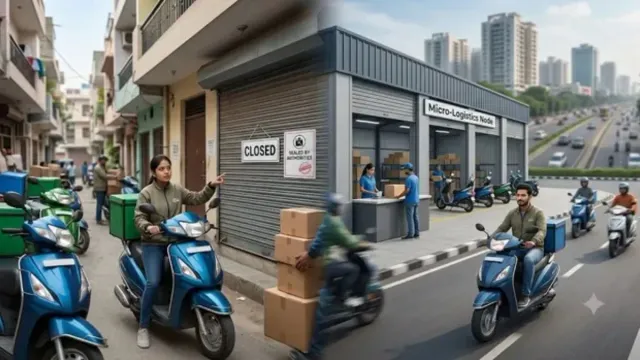
- Dark stores banned from Delhi residential colonies.
- Relocated to external micro-logistics nodes.
- Only electric vehicles for last-mile delivery.
Sanjeev Gupta, New Delhi: To eliminate traffic congestion in residential colonies caused by quick-commerce platforms like Blinkit, Zepto, and Instamart, a "micro-logistics policy" has been introduced under the Master Plan for Delhi-2047. Under the framework, dark stores operating inside residential areas will be closed and moved to micro-logistics nodes.
The Problem
Currently, delivery companies lease shops or houses along narrow residential streets to set up warehouses. The continuous parking of delivery staff's motorcycles and scooters, along with trucks dropping off goods, blocks lanes, causes traffic jams, and increases risks for residents.
How Will The New System Work
- Designated External Hubs: Dark stores will be shifted to dedicated spaces near metro stations, parking lots, or main markets.
- Electric Vehicles Only: Electric two-wheelers and bicycles will be used to deliver goods from dark stores to colonies to lower noise and emissions.
- Charging and Parking Facilities: The new nodes will be equipped with battery-charging and parking facilities for delivery staff.
Key Changes At A Glance
- Residential Ban: Dark stores will be prohibited inside residential colonies.
ALSO READ: Narela, Dwarka Or Rohini? Delhi Govt's Proposal For 'Namo City' Likely To Include These Sites
- Relocated Outlets: Delivery nodes will be moved to metro stations and main market areas.
- Clean Fleet: Only electric two-wheelers and bicycles will be allowed to deliver within colonies.
- Traffic Relief: Congestion and parking issues in residential areas will be eliminated.
Delhi's Master Plan 2047 Outlines Significant Urban Development Changes
The Master Plan for Delhi (MPD) 2047 outlines several major changes for the development of the capital, which also includes strategies ranging from controlling traffic and parking arrangements to development of Old Delhi and commercial hubs, controlling noise pollution, rejuvenation of Yamuna, redevelopment of unauthorised colonies and slums and preserving the heritage of Lutyens Zone.
Recommended For You
The plan proposes cracking down on illegal parking on roads, linking parking availability to new vehicle registrations, declaring the Yamuna floodplains as no-construction zones, and developing large-scale green corridors to increase greenery.