
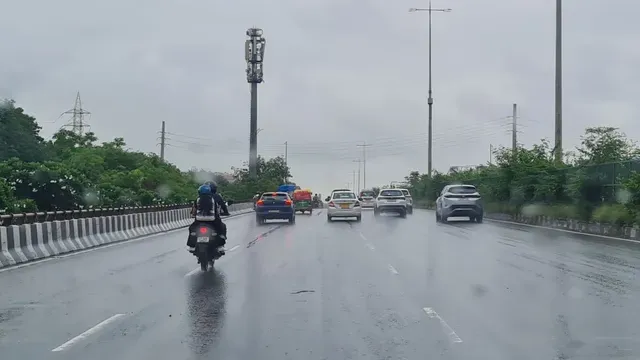
- Monsoon slows down, delays arrival in Delhi in July
- Decrease in rainfall in July-September due to the effect of El Nino
- Poor drainage, lack of coordination between administration and weather department
Jagran Correspondent, New Delhi: The weather has become increasingly unpredictable. Winters are getting shorter while summers seem to be stretching longer with monsoon arriving late. Even when it is on time, the rains are rather erratic, uneven and far from what is expected.
Record-breaking rain is observed in some places, while drought conditions prevail in others. This year, too, uncertainty regarding the monsoon and rainfall remains. Jagran had a conversation with Mahesh Palawat, Vice President (Meteorology and Climate Change) at Skymet Weather.
Why Is The Pace Of Monsoon Slow This Year?
For the monsoon to advance, a low-pressure area needs to form in the Bay of Bengal, which did not form in the initial stages this time. The Somalia jet stream winds coming from the Indian Ocean are also weak. It is now expected that the system will become active in the Bay of Bengal around June 28-29. Consequently, the chances of the monsoon arriving in Delhi before the first week of July are slim.
Will The Rains Compensate In July-August?
This is unlikely, Palawat said. He added that this year's El Nino is one of the strongest ever. Its impact will be felt as the monsoon progresses, potentially leading to reduced rain in July, August, and September. However, there will be occasional good spells of rain. Rainfall may reach near normal in July and August, but the June deficit will not be fully compensated.
Recommended For You
What’s Behind Low Rainfall?
This is happening not just in Delhi, but all over the world, Palawat notes. Winters in Delhi are shrinking, and the monsoon is becoming more erratic. A major reason for this is the shift in the pattern of western disturbances. Disturbances that used to occur in October and November are now arriving in December and January, extending into the summer months (April and May). This is a direct impact of climate change.
ALSO READ: El Nino Alert: UN Warns Of Weak Monsoon In India; Will It Trigger Food Security Risks?
Much of Delhi's development has been unplanned. Palawat further said that our sewage lines are blocked and filled with plastic waste. Just 40 mm of rain can congest Delhi. Drainage should be cleaned in May. When the Meteorological Department or Skymet Weather issues a "red alert," the MCD should have water pumps in place in advance. However, this is prevented due to a severe lack of coordination between the administration and the Meteorological Department and other agencies.
Does Skymet Weather Provide Any Specific Inputs To Administration?
Whenever winds from three directions (north, Bay of Bengal, and Arabian Sea) collide, there is a risk of sudden heavy rainfall, like a cloudburst. We detect such systems 24 to 48 hours in advance and immediately alert the administration. The administration should also be prepared to take immediate action on our warnings to avoid this disaster.
(With Inputs From Sanjeev Gupta)